Skip to the page
Your first film, on usin 48 hours

How we made Moonlit's product video.

A 71-second film we made from Moonlit's live product, as an example of our work. Below is each step, from studying their 16 videos to our last review.

Legal researchProduct film · 1:11 · B2B · Unofficial demo1:11 · Unofficial demoAlsoThe reel · 0:57

13 chapters

AlsoThe reel · 0:57

Moonlit (moonlit.ai) is legal research software that links every answer to its source. Our film follows one workplace privacy question until the court's own words open beside the answer.

Moonlit's part
Press play.

Moonlit: the film

0:00 / 1:11
02What Moonlit does
For your film, we check how people find you

We studied Moonlit first.

Moonlit is legal research software for lawyers. We sorted the 16 videos they had when we started by what each one shows.[1,2]

Moonlit gathers and legislation from official sources and links every answer back to its source.[3,4]

“Ask Luna. It reads the sources, cites every document it used and keeps the matter together.”

The promise on Moonlit's Platform page (opens in a new tab).
16 videos. The real app shows up only in silent ones.

A square for each of their 16 videos, grouped by what it shows, and we went through every one.

Their 16 videos from before we started, by kind. The ones that show the real app are silent, and the one with a voice is about e-invoicing. Ours walks through Search and Luna with a voice.

Short clips 10

Podcast cuts 3

Screen recordings 2

A talk 1

Search and Luna, narrated

Theirs: 0

Ours

1:11174 spoken words
03Legal tech films
For your film, we study your market

We watched legal tech films.

Four of the 13 promise to turn hours into minutes. Ours opens the Court's own words behind the answer.

Theirs

Legal research films often sell speed.

We watched the 13 films one by one and wrote down what each one claims.

  • Hours to minutes4 of 13 films, for example at 0:38[9]
  • Blurred fake screens1 of 13 films, for example at 0:39[10]
  • Unreadably fast answers2 of 13 films, for example at 0:06[11]

Ours: the source, opened

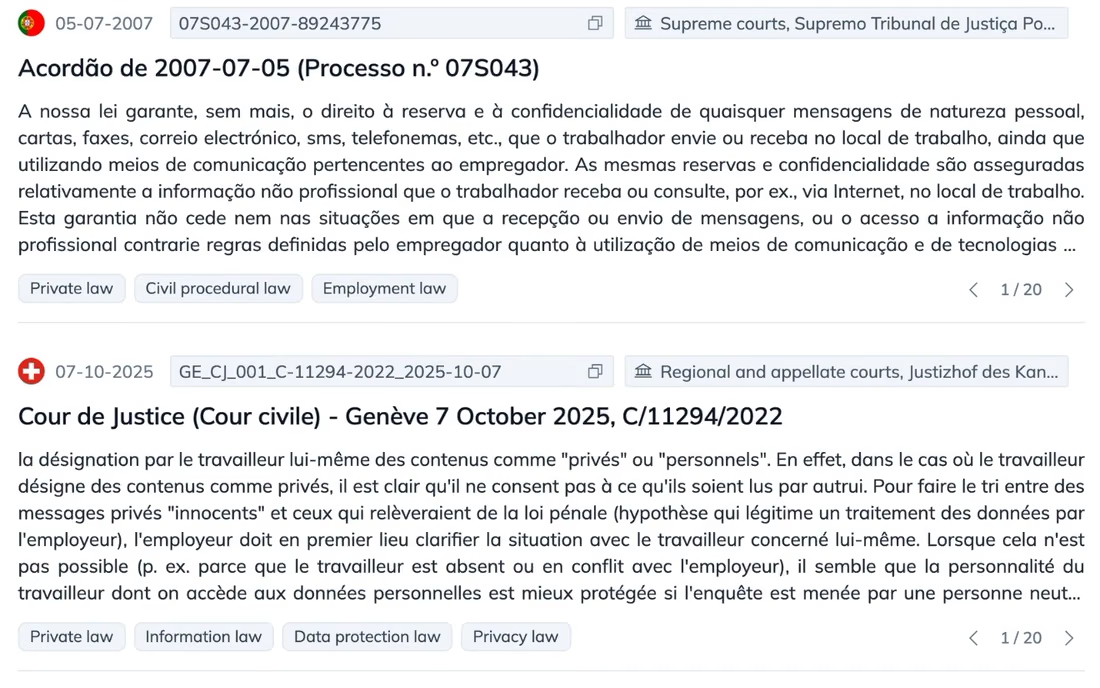
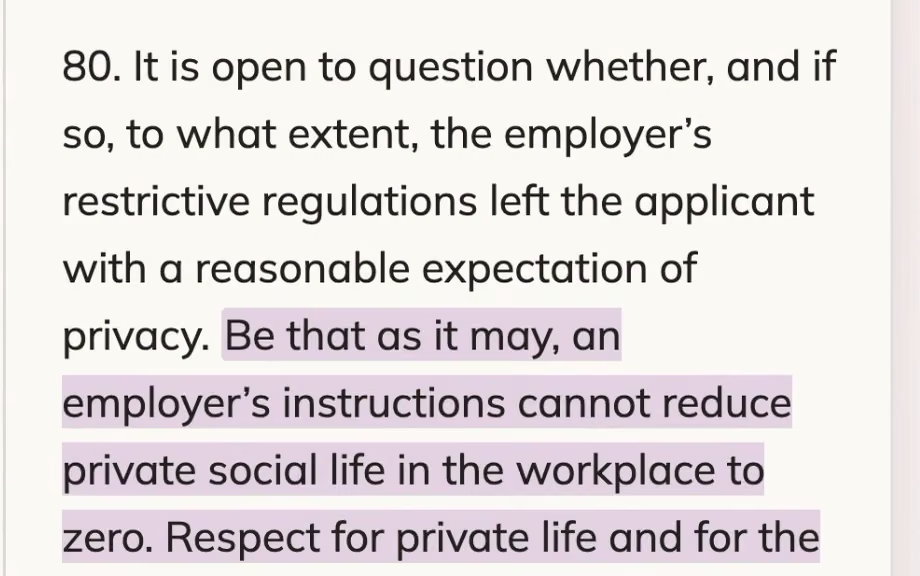
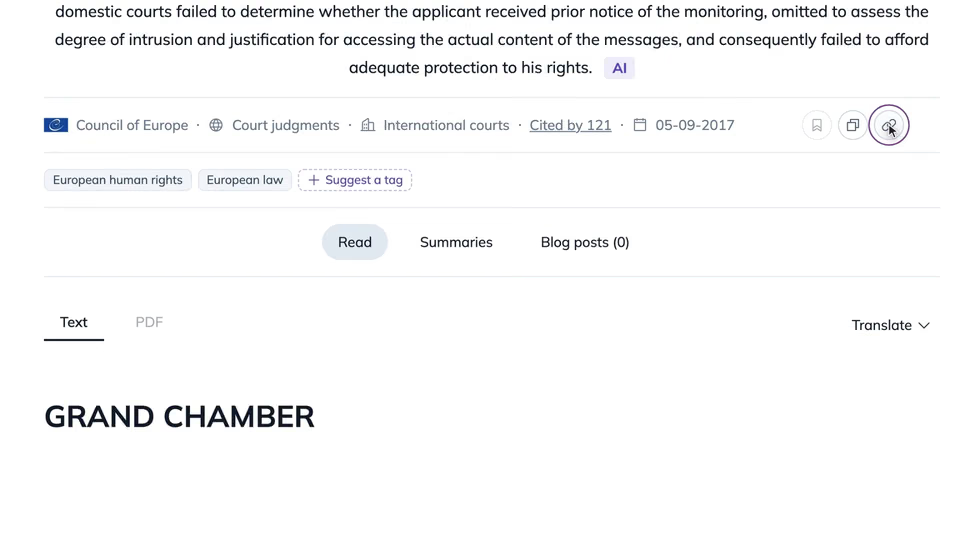
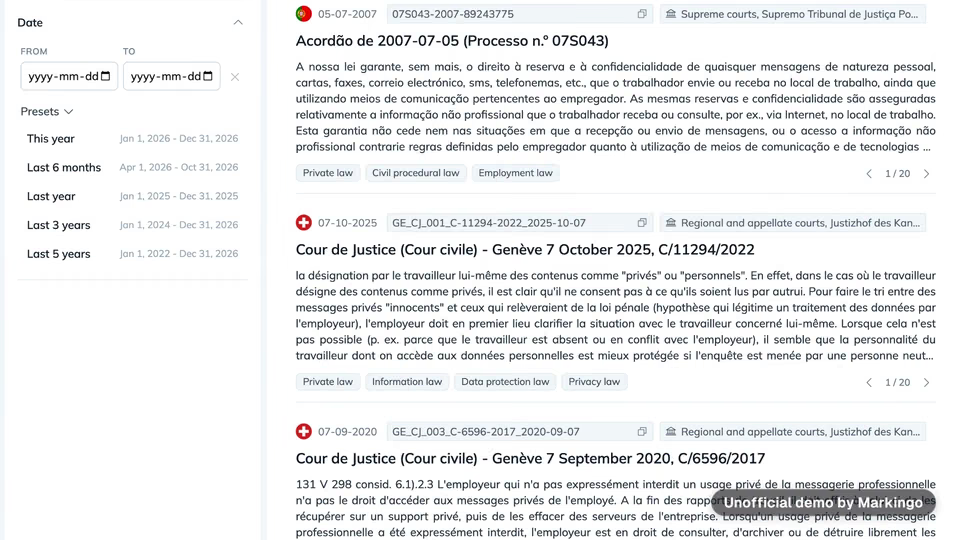
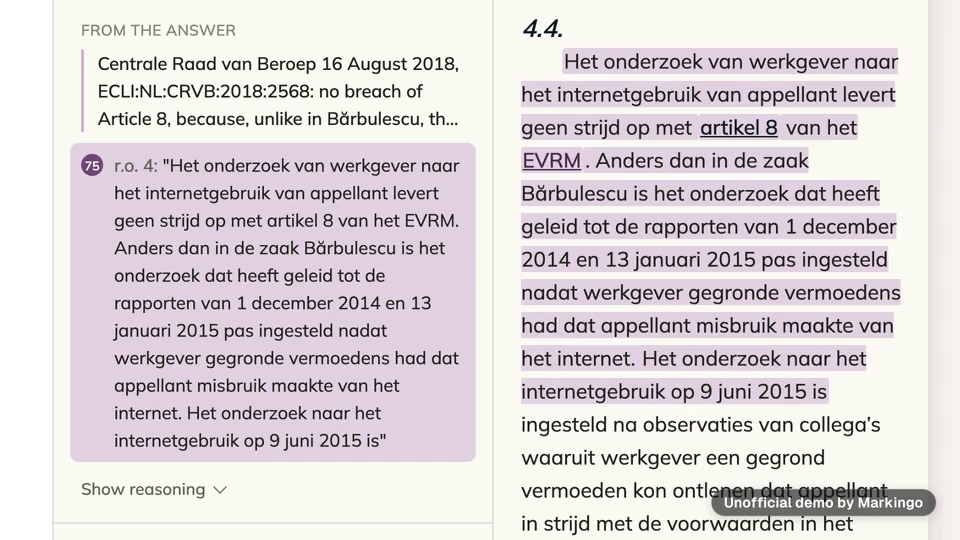
A Dutch ruling, opened at its passage.
04The story
For your film, we write the story in your brand

We picked one story.

We picked one of three ideas, the waterline: each answer above a line, and its source below it.

“So checking takes one click.”

The film, at .

We chose the waterline.

  1. AThe waterlineChosen

    Why we chose it: Moonlit's logo is moonlight on water. So the film puts each answer above a line and its source below it.

  2. BNamed and dated

    Why not: Labels on every claim would have read like a database.

  3. CDocuments first

    Why not: It would claim a step-by-step order of work that the screens can't show.

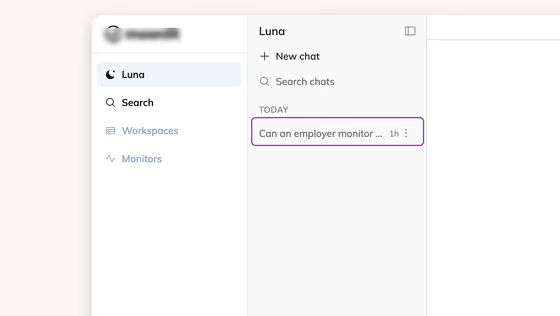
The question, step by step.
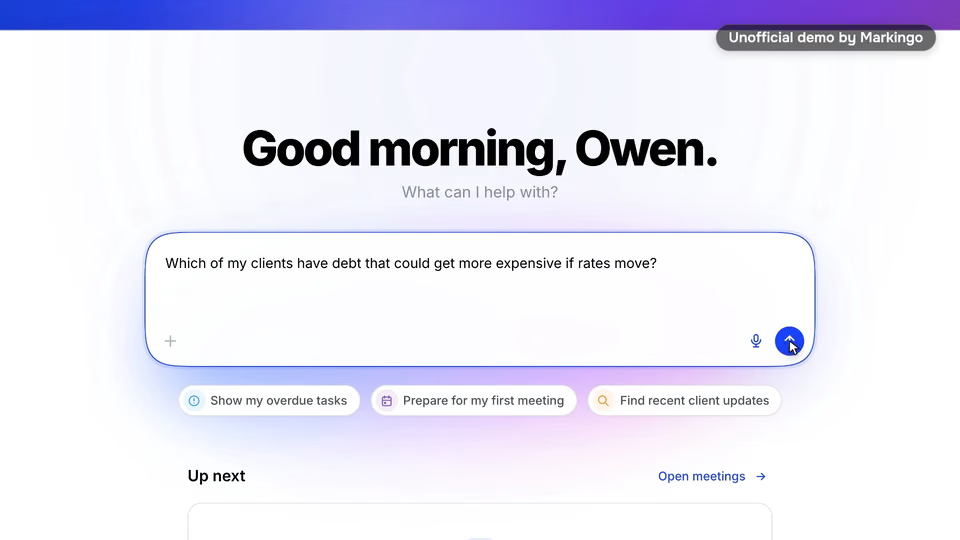
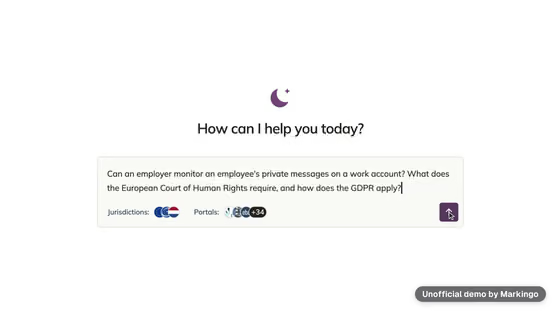
  1. 1Asked

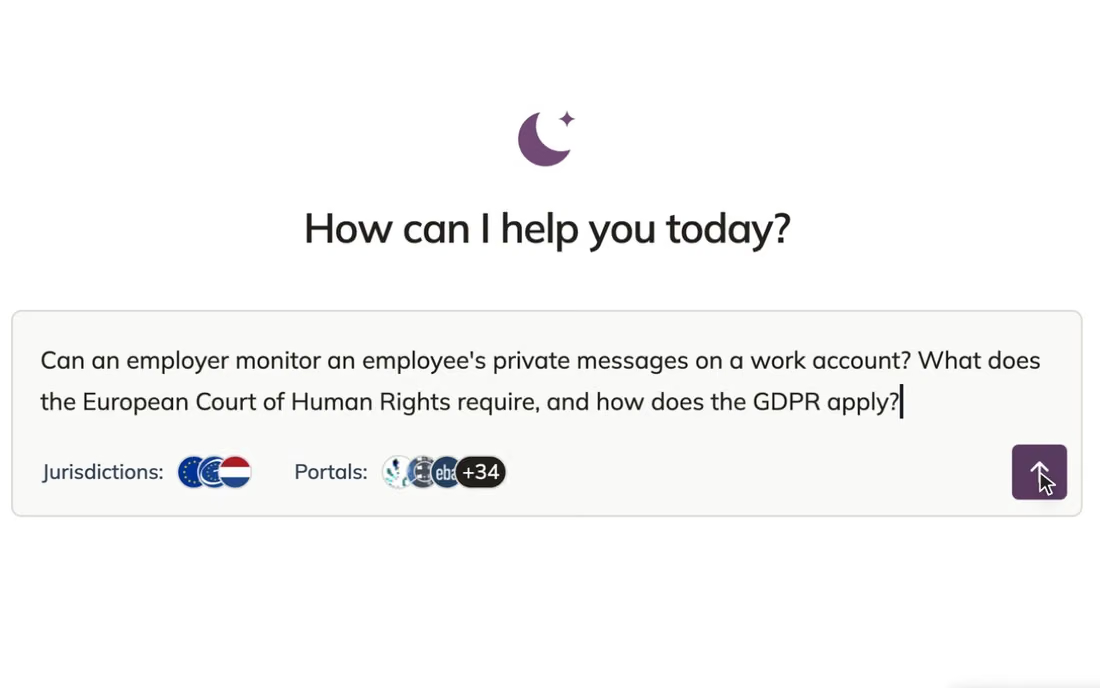
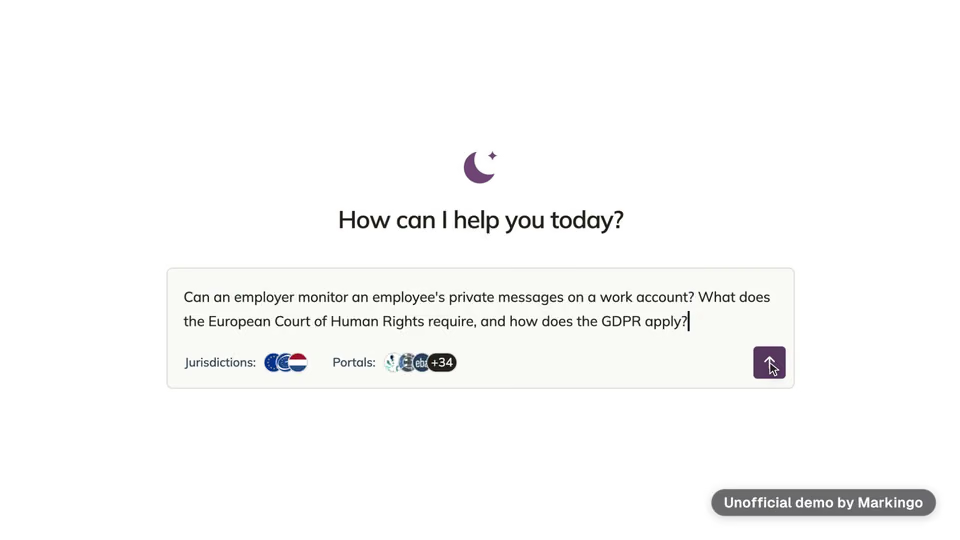
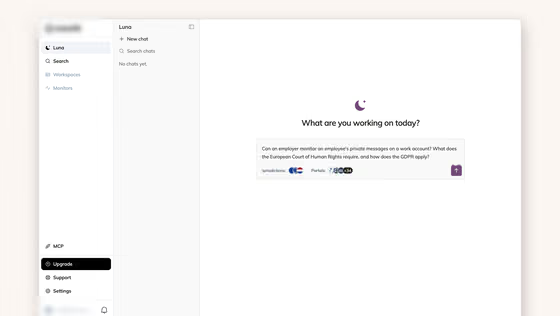
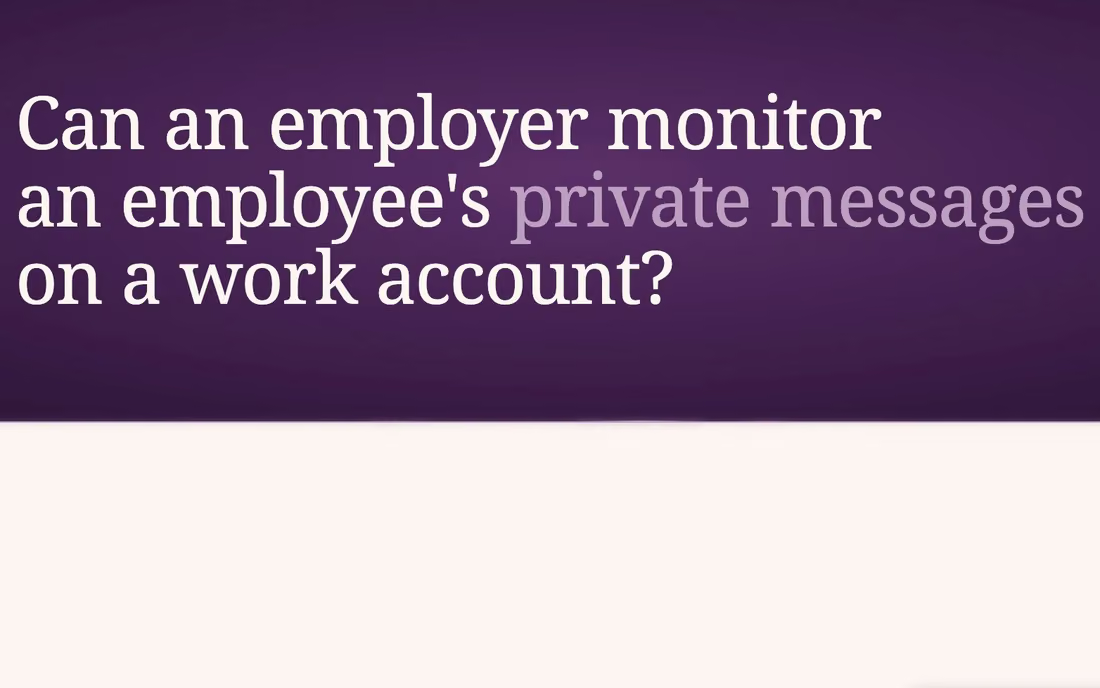
    One plain question about workplace privacy.

  2. 2Searched

    Rulings in Portuguese and French, as written.

  3. 3Opened

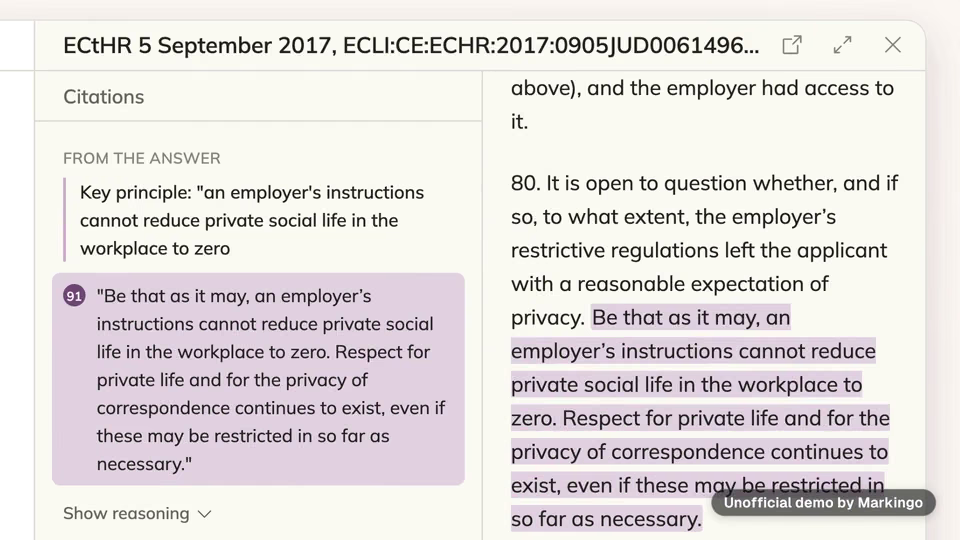
    The judgment on the Court's own site.[12]

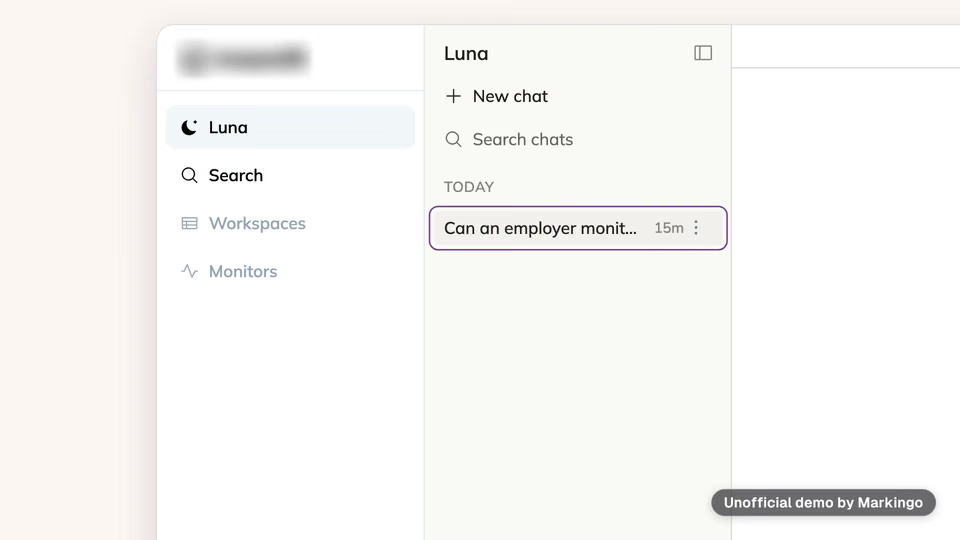
  4. 4Asked Luna

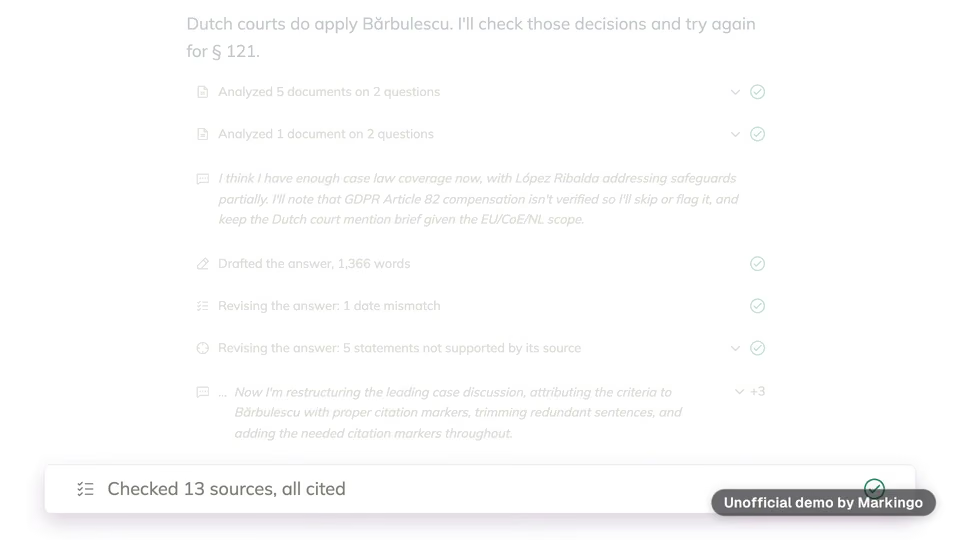
    The same question, put to Luna.

  5. 5Answered

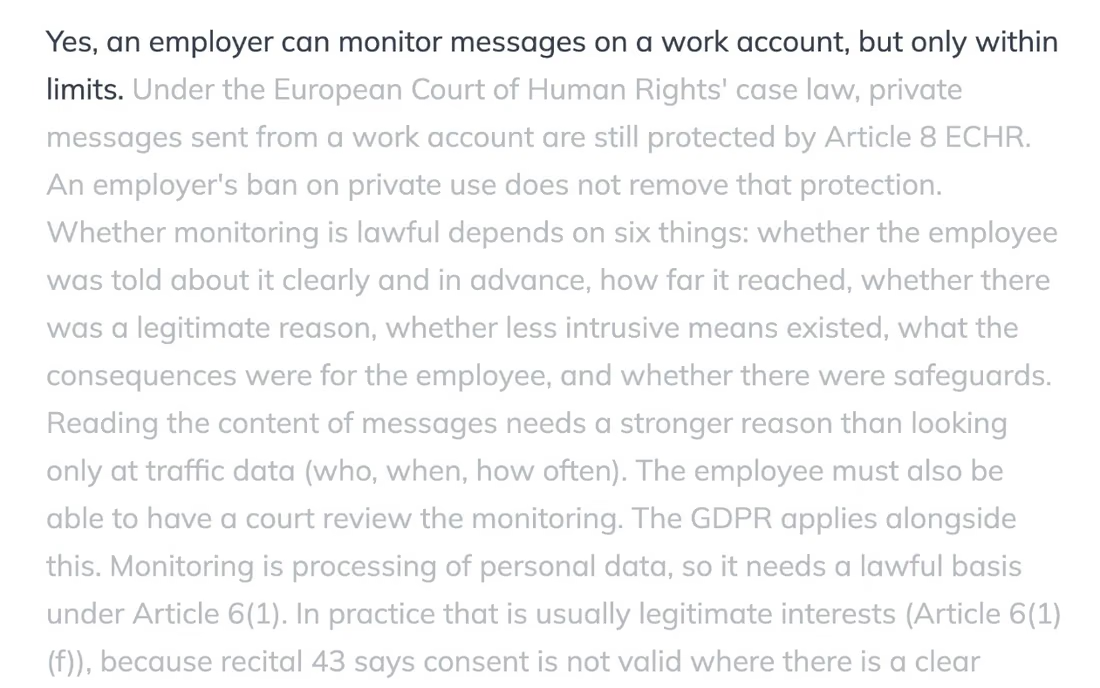
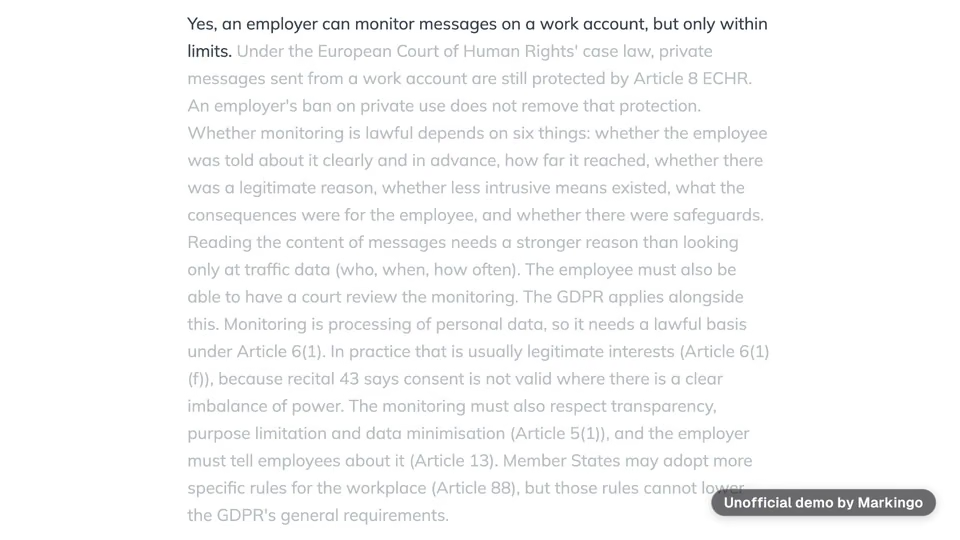
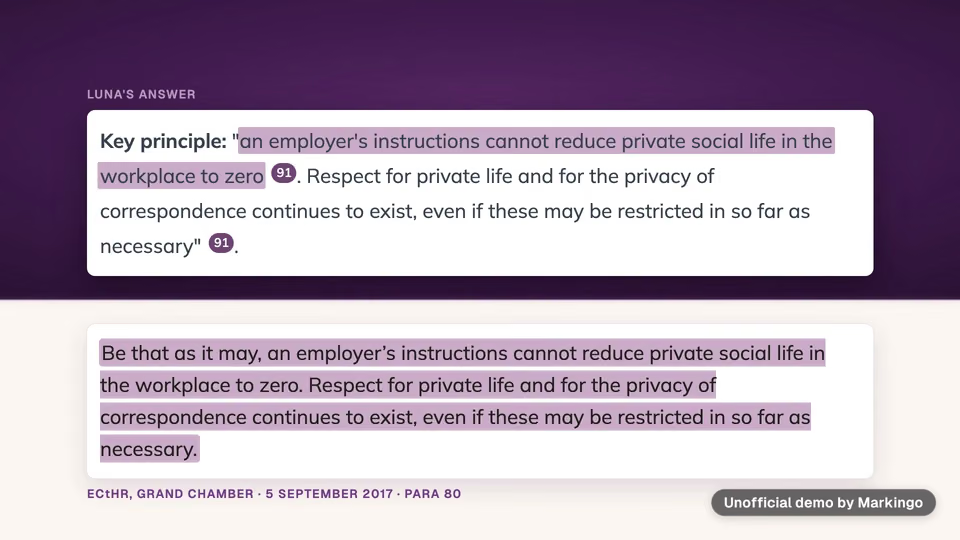
    Luna's answer, in one sentence.

  6. 6Sourced

    The Court's paragraph, open beside the answer.
05Screens, planned and filmed
For your film, we film every screen

We planned every screen, then filmed it.

Before filming we drew thirteen , so the question could travel from search to the Court's own words. Pick a moment to play it.

Changed from our plan: 4 of 10 momentsFilmed as planned: 6 momentsThe rest of the film

A Dutch ruling·

A Dutch ruling

PlannedA Dutch citation clicked; the ruling opens at its passage, a circle around its quote of the Strasbourg case.

WhyThe same check works across borders: a Dutch ruling opens in Dutch.

ChangedWe left out the circle, because this passage names the case without quoting it.

Every screen is Moonlit's own, filmed in the live product.

06Motion and music
For your film, we animate it

We animated it and wrote its music.

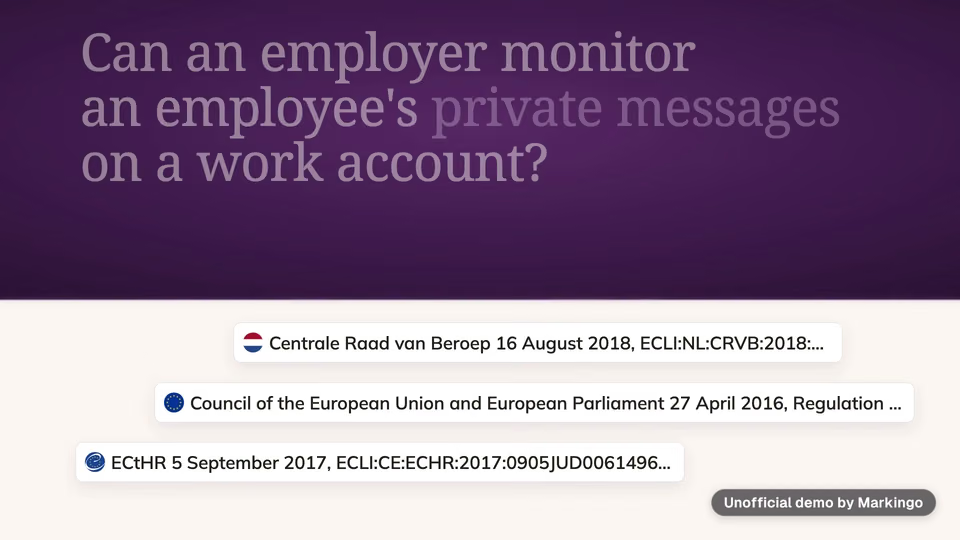
Three legal sources rise into view, each as it is named. Then comes our music, slow and quiet, like night.

Strings start as the narrator says Moonlit; while the Court's words are shown, the music keeps to one chord.

For your film, we write its music
Play the film from 0:00. Night sounds · 0:00 to 0:15 · A warm, low hum and a faint, high, bright sound, with a piano note in the gaps between words.Play the film from 0:15. Strings for Moonlit · 0:15 to 0:18 · Low, warm strings start as the narrator says “Moonlit”.Play the film from 0:18. Quick piano notes · 0:18 to 0:30 · Quick, soft piano notes run through the search; from “Narrow”, a light bell plays along.Play the film from 0:30. Fewer notes · 0:30 to 0:33 · Fewer piano notes play while Luna is on screen.Play the film from 0:33. A low beat comes in · 0:33 to 0:39 · A soft, low beat while Luna works.Play the film from 0:39. Quick notes again · 0:39 to 0:42 · For the answer the beat stops, and the rising piano notes return.Play the film from 0:42. Single notes · 0:42 to 0:45 · Single piano notes as the citation is clicked.Play the film from 0:45. Steady for the source · 0:45 to 0:53 · The quick piano notes stop, strings come in, and the music stays on one chord while the Court's words are on screen.Play the film from 0:53. Back to the start · 0:53 to 0:55 · On “one click”, it returns to the sound it started with.Play the film from 0:55. Slower notes · 0:55 to 0:58 · Lighter, slower notes for the Dutch ruling.Play the film from 0:58. Strings return · 0:58 to 1:01 · The strings return as the chat is saved.Play the film from 1:01. The last notes · 1:01 to 1:11 · The opening sounds and the strings together, then three last piano notes as the picture fades.
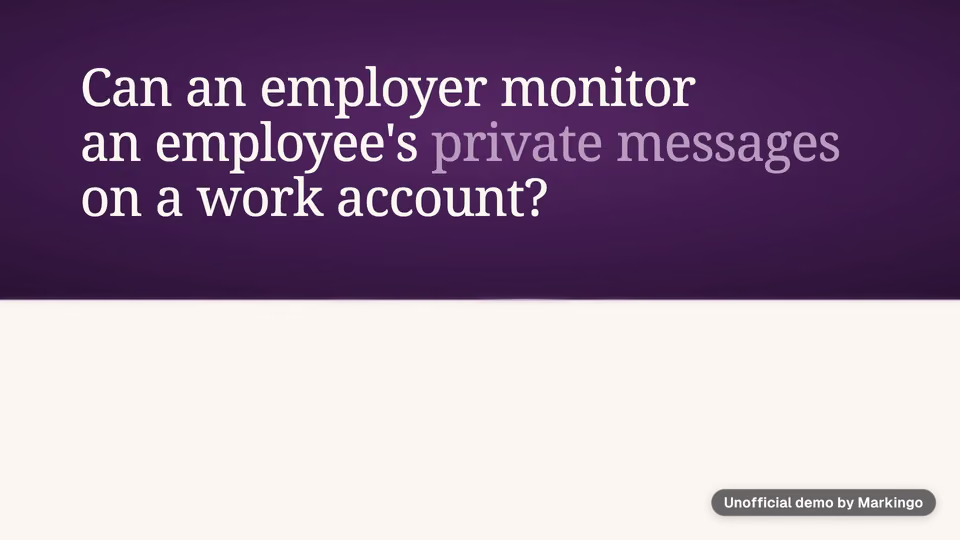
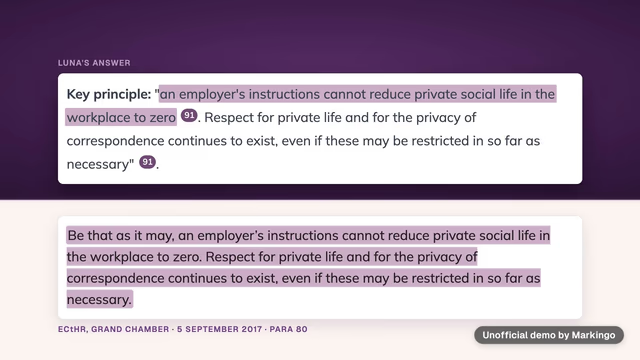
Play the film from 0:01: Can an employer monitor an employee's private messages on a work account?Play the film from 0:06: The answer runs through a Strasbourg ruling, an EU regulation and the Dutch courts... on different portals, in different languages.Play the film from 0:15: Moonlit puts it all in one place.Play the film from 0:19: Search it in plain words, and rulings come back from across Europe... each in its own language.Play the film from 0:25: Narrow it to Strasbourg and open the leading case.Play the film from 0:28: It links straight back to the official text.Play the film from 0:30: Or ask Luna, the way you'd ask a colleague.Play the film from 0:33: It finds the sources and reads them itself... then checks its draft against them before it answers.Play the film from 0:39: Yes, it says, but only within limits.Play the film from 0:42: Click a citation, and the judgment opens right beside the answer.Play the film from 0:47: An employer's instructions cannot reduce private social life in the workplace to zero.Play the film from 0:52: So checking takes one click.Play the film from 0:55: Even a Dutch ruling opens at its passage, in Dutch.Play the film from 0:59: And it saves the conversation, so you can pick it up later.Play the film from 1:02: You can start free, with Search and five Luna chats a week.Play the film from 1:06: Research you can stand behind.
  1. A warm, low hum and a faint, high, bright sound, with a piano note in the gaps between words.

  2. Low, warm strings start as the narrator says “Moonlit”.

    “all in one place.”

  3. Quick, soft piano notes run through the search; from “Narrow”, a light bell plays along.

  4. Fewer piano notes play while Luna is on screen.

  5. A soft, low beat while Luna works.

  6. For the answer the beat stops, and the rising piano notes return.

  7. Single piano notes as the citation is clicked.

  8. The quick piano notes stop, strings come in, and the music stays on one chord while the Court's words are on screen.

    “private social life in the workplace”

  9. Lighter, slower notes for the Dutch ruling.

  10. The strings return as the chat is saved.

  11. The opening sounds and the strings together, then three last piano notes as the picture fades.

We made 12 parts of music to go with the 174 spoken words.

07What we learned

What we learned.

Making Moonlit's film changed how we narrate, edit and open a film.

The finished film

We redid that line of the narration, so the film says only what the answer says.

  1. 01

    Narration says only what the screen shows. Our line said “narrow limits” where the answer on screen said only “limits”, so we redid our line to match.

  2. 02

    Between two pages of text, we jump straight from one to the next, because fading one into the other would show both pages' words at once.

  3. 03

    The first frame works as the thumbnail, so the question's first line is on screen from the start.

Try this on yours

Put the claim and its source in one frame: the answer beside the court's words.

08Done for them
Our process, step by step

Every step, done for them.

It began with their 16 videos and ended on a second watch of the film, when we were happy with every moment.

  1. Research and story6 steps
    1. 01We studied Moonlit and its videos.
    2. 02We used Moonlit like a new lawyer.
    3. 03We tried six parts of the product.
    4. 04We chose one plain question.
    5. 05We wrote three ideas and drew 13 storyboards.
    6. 06We checked the plan and changed it before filming.
  2. Voiced, filmed, designed3 steps
    1. 07We wrote the narration around one plain question.
    2. 08We filmed every screen, live.
    3. 09We designed it and wrote its music.
  3. Animated and reviewed3 steps
    1. 10We redid one line of the narration to match.
    2. 11We animated it, scene by scene.
    3. 12We reviewed the film twice.

Our part

Every step above, from their first video to the second review.

Moonlit's part

Your part

Your website, then any notes you like.

Your turn

Your first film is on us.

You pay nothing, and it's ready in 48 hours.

Every step on this page, done for your product. Tell us what to change, as often as you like.

  • 48hYour film in under 48 hours
  • Every stepOn this page, included
  • YoursTo keep, even if you don't like it
11Words and sources

The film's own words.

Everything you hear in the film, word for word, with the time it is said. Choose a line to play from there.

The work behind this film

sources read
35
parts of the product tried
6
rival films watched
13
ideas written
3
storyboards drawn
13

Every word said in the film, in order.

  1. Narrator

Show all 16 lines

35 sources read for this film and its reel

The sources this page cites come first, numbered as you meet them; then every other source we read. All links accessed November 6 or 7, 2026.

Their videos, press and reviews 3

  1. 2Moonlit's knowledge-graph film on LinkedIn, Sep 1, 2026 (opens in a new tab) LinkedIn (Moonlit) · their videoBack to the text
  2. 6Moonlit's brand clip on YouTube (opens in a new tab) YouTube (Moonlit) · their videoBack to the text
  3. 29The Court's own press release on the ruling (opens in a new tab) Court of Justice of the European Union · press release

References and data 8

  1. 3case law (opens in a new tab) Wex, Legal Information Institute, Cornell Law School · a definitionBack to the text
  2. 12The Grand Chamber judgment of Sep 5, 2017, on HUDOC (opens in a new tab) HUDOC, European Court of Human Rights · official textBack to the text
  3. 17European Court of Human Rights (opens in a new tab) Wikipedia · a definition
  4. 28The Court of Justice's judgment of Oct 1, 2019, on EUR-Lex (opens in a new tab) EUR-Lex, Publications Office of the European Union · official text
  5. 30The second judgment Luna read, Nov 11, 2020 (opens in a new tab) EUR-Lex, Publications Office of the European Union · official text
  6. 31Directive 2002/58/EC on privacy and electronic communications (opens in a new tab) EUR-Lex, Publications Office of the European Union · official text
  7. 32Regulation (EU) 2016/679, the General Data Protection Regulation (opens in a new tab) EUR-Lex, Publications Office of the European Union · official text
  8. 35A public database of court filings with invented citations (opens in a new tab) Damien Charlotin · database