Skip to the page
Your first film, on usin 48 hours

How we made Ribbon's product video.

An 84-second film we made in Ribbon's live product, as an example of our work. Below is how we ran five evening interviews in it and filmed them.

RecruitingProduct film · 1:24 · B2B · Unofficial demo1:24 · Unofficial demo

14 chapters

Ribbon is recruiting software that interviews every applicant by phone or video, at any hour. Our film follows one night of hiring, from a job post to a ranked .

Ribbon's part
Press play.

Ribbon: the film

0:00 / 1:24
02What Ribbon does
For your film, we check how people find you

We studied Ribbon first.

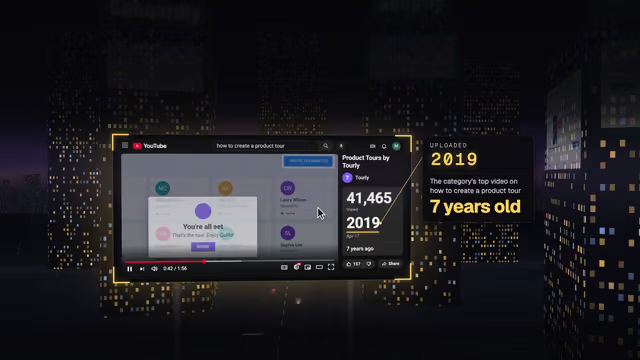
We put Ribbon's launches and videos from May to October on one timeline, to see which launches already had a video.

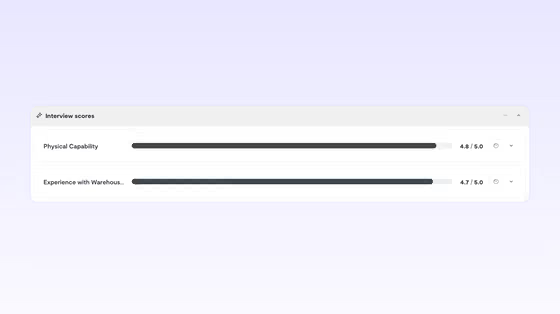
Teams hiring hourly staff, from warehouses to hotels, send every applicant one link. Each answers the same when it suits them; Ribbon rates each answer and ranks them.[1,2]

“Your best candidates are working days somewhere else.”

Their own words, on Ribbon's warehouse hiring page (opens in a new tab).
Ribbon launched six features in August and September and made no video about any of them.[3]
  1. LaunchSearch every interview[3]
  2. Search from anywhere[3]
  3. Resumes, rated on arrival[3]
  4. 37 days, no video
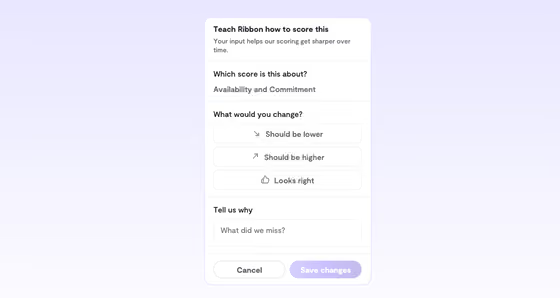
  5. LaunchTeach Ribbon how to score[3]
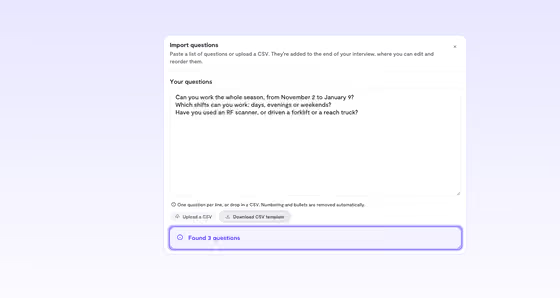
  6. Import your own questions[3]
  7. Weighting each question[3]
10 videos, Jul 2025 to Sep 2026
03Hiring films
For your film, we study your market

We watched four films about hiring hourly staff.

Each comes from its maker's own channel (Paradox, micro1, Alex and Fountain), and each one sells interview software for hourly work.

  1. Paradox Hourly hiring made simple (opens in a new tab)[11]

    What it shows: Actors text a hiring assistant on their phones.

  2. micro1 Meet Zara (opens in a new tab)[12]

    What it shows: A photo stands in for the interviewer.

  3. Alex Warehouse Associate Interview (opens in a new tab)[13]

    What it shows: One recorded interview, with its live transcript.

  4. Fountain Who is Fountain? (opens in a new tab)[14]

    What it shows: Leaders on camera, between shots of shift work.

Ours: one interview, no one on camera

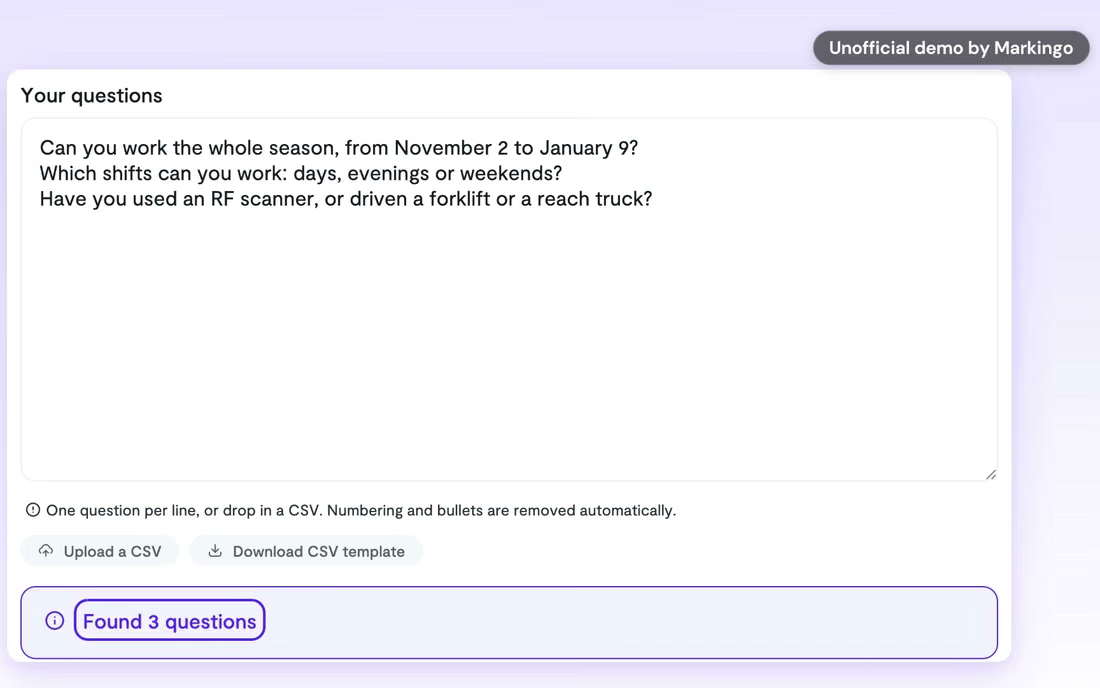
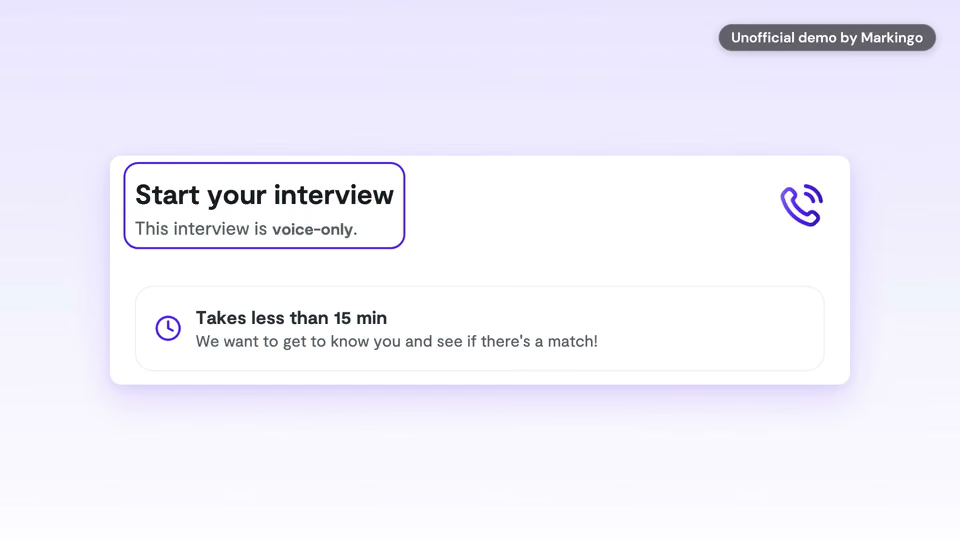
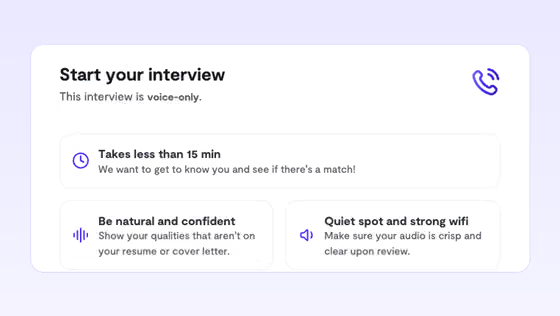
A voice-only call, on the product's own screens.
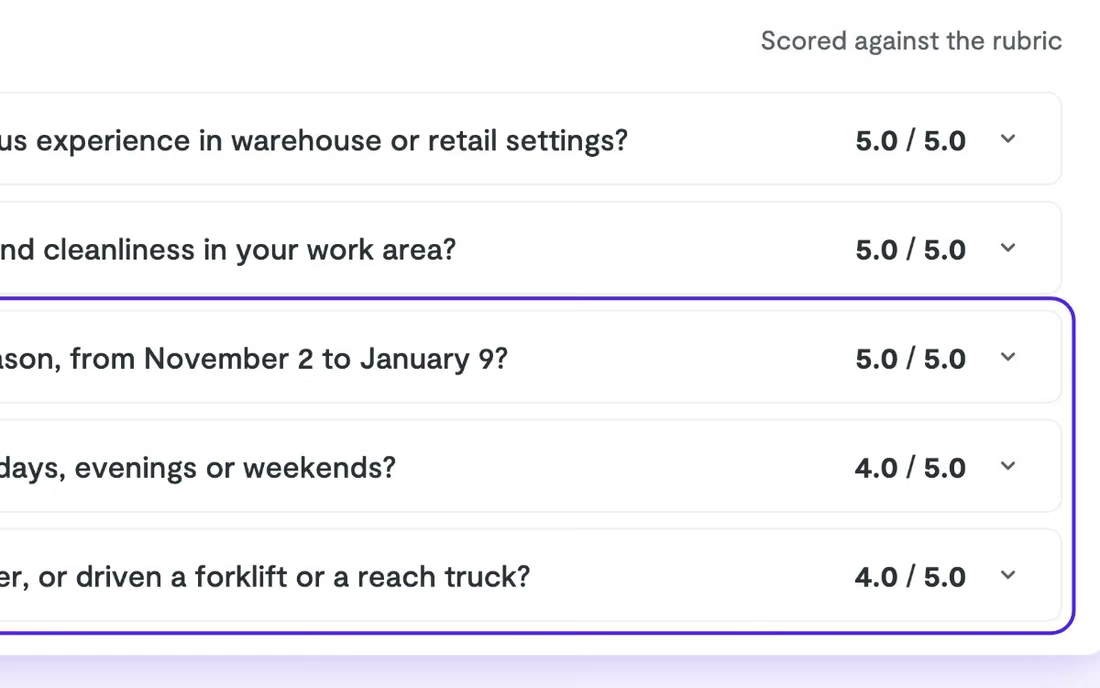
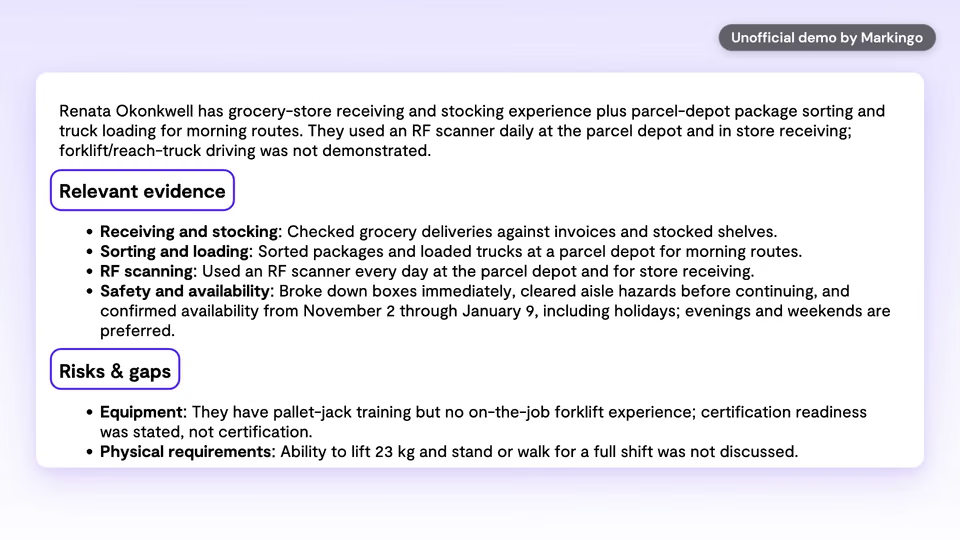
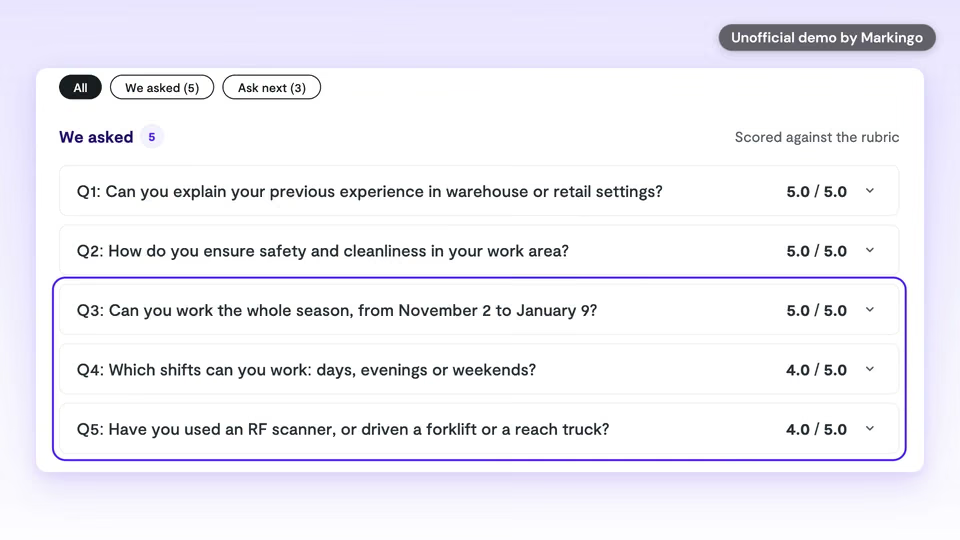
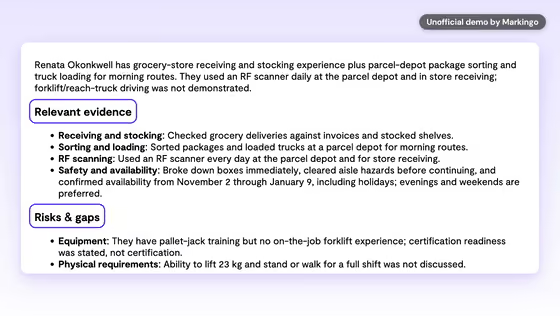
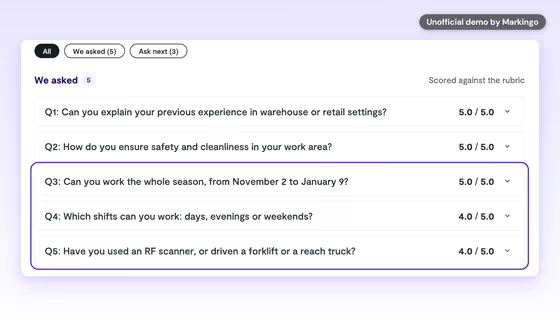
By morning, a scorecard with the evidence in her answers and what was missing.
04The story
For your film, we write the story in your brand

We picked one story.

We had three ideas and kept the one set over a single night of interviews.

“And nobody from Pellmore is on call.”

The film, at .

We chose one night between shifts.

  1. ABetween shiftsChosen

    Why we chose it: Ribbon's product is the interview itself, so the film opens in the middle of one.[2]

  2. BFour tiles

    Why not: It decorates the product instead of showing it.

  3. CSame questions, side by side

    Why not: A dense grid is unreadable on a phone.

One night of hiring, from the job post to a ranked list.
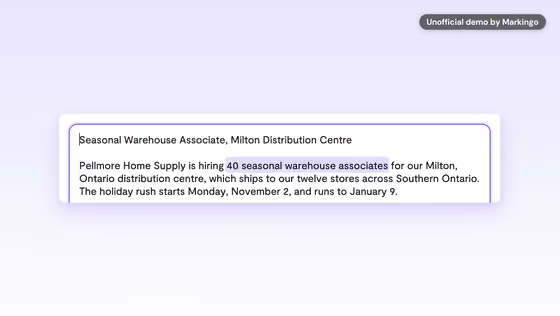
  1. 1Posted

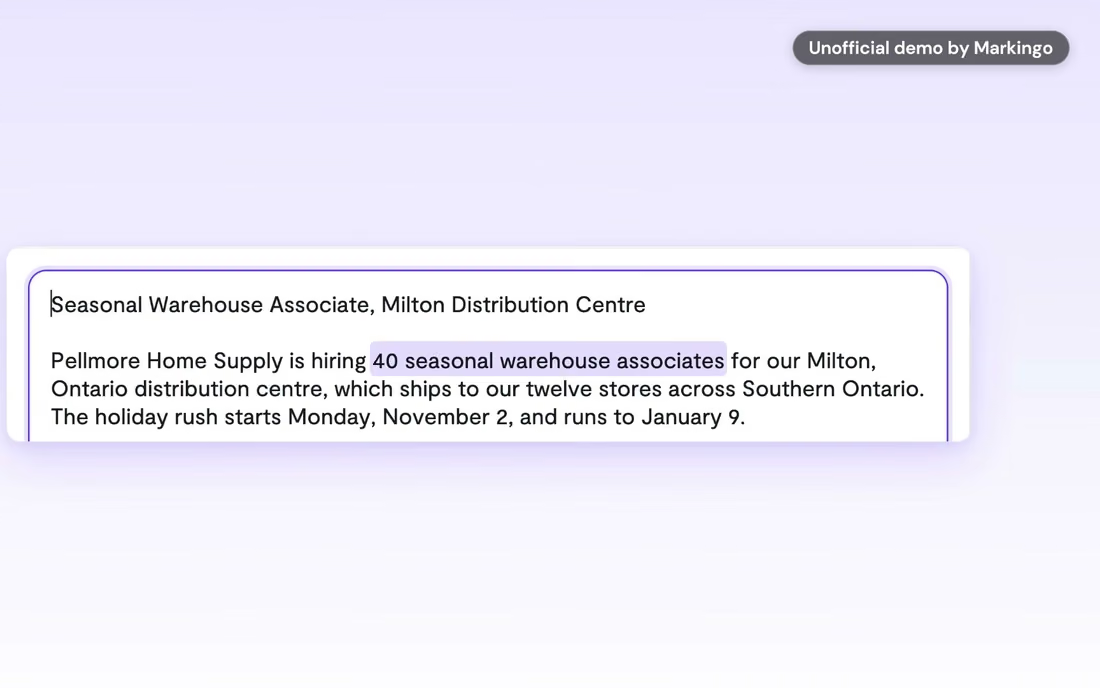
    Forty hires, one job post.

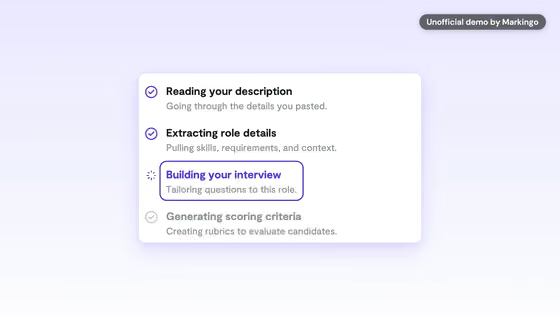
  2. 2Imported

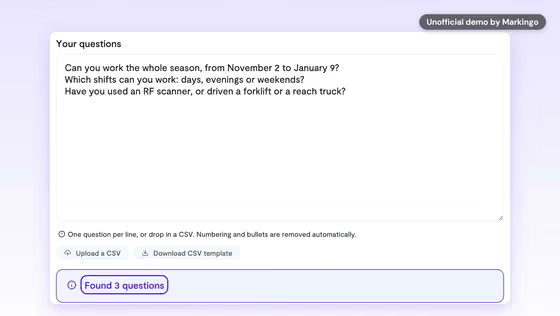
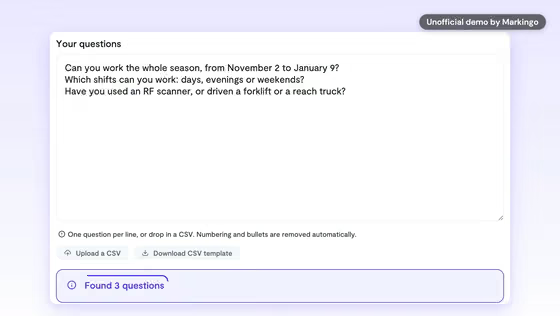
    Her questions, from a spreadsheet.

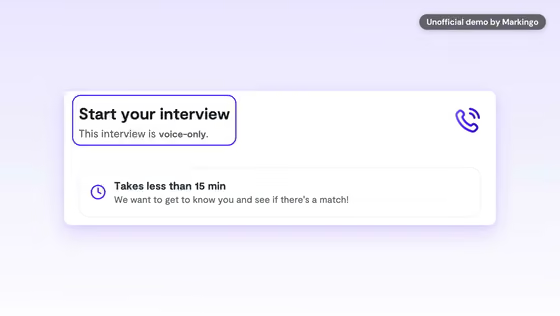
  3. 3Asked

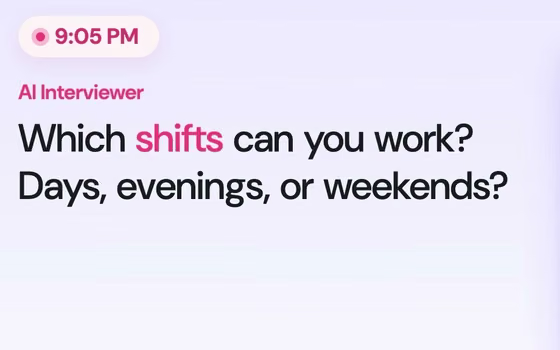
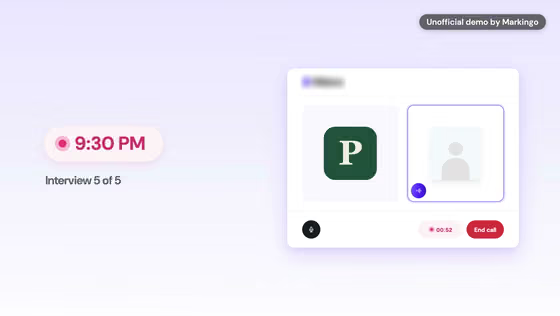
    At 9:05 PM, after her day shift.

  4. 4Heard

    Her answer shapes the next question.

  5. 5Rated

    Against the questions she set.

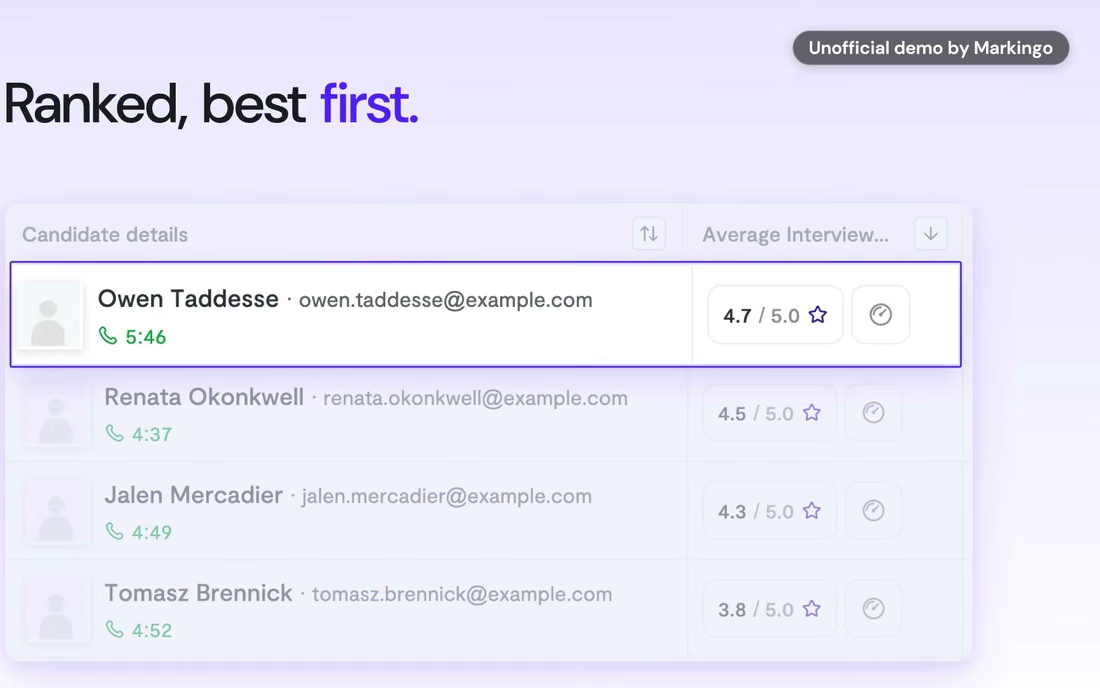
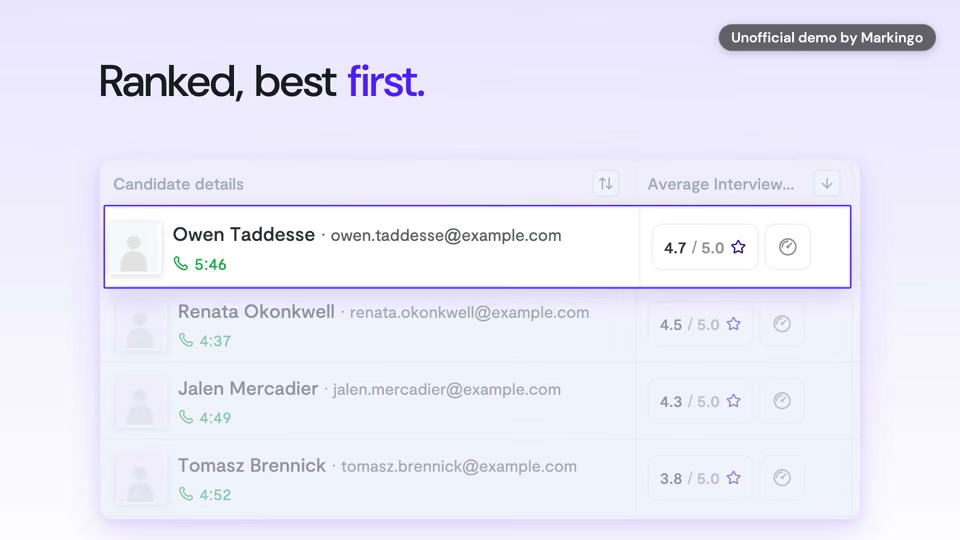
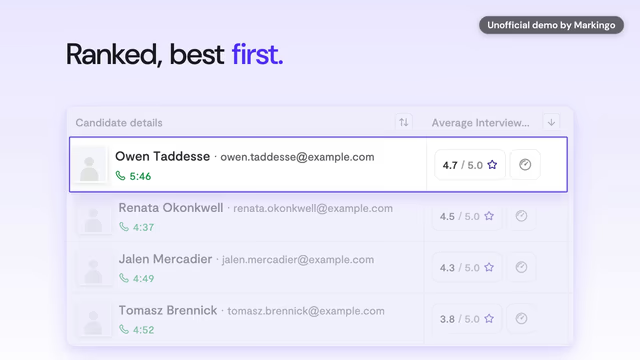
  6. 6Ranked

    Best first, by morning.
05Screens, planned and filmed
For your film, we film every screen

We planned every screen, then filmed it.

We drew fourteen for one night of hiring, from the job post to the morning's shortlist. Pick a moment to play it.

Changed from our plan: 5 of 11 momentsFilmed as planned: 6 momentsThe rest of the film

The interview at night·

The interview at night

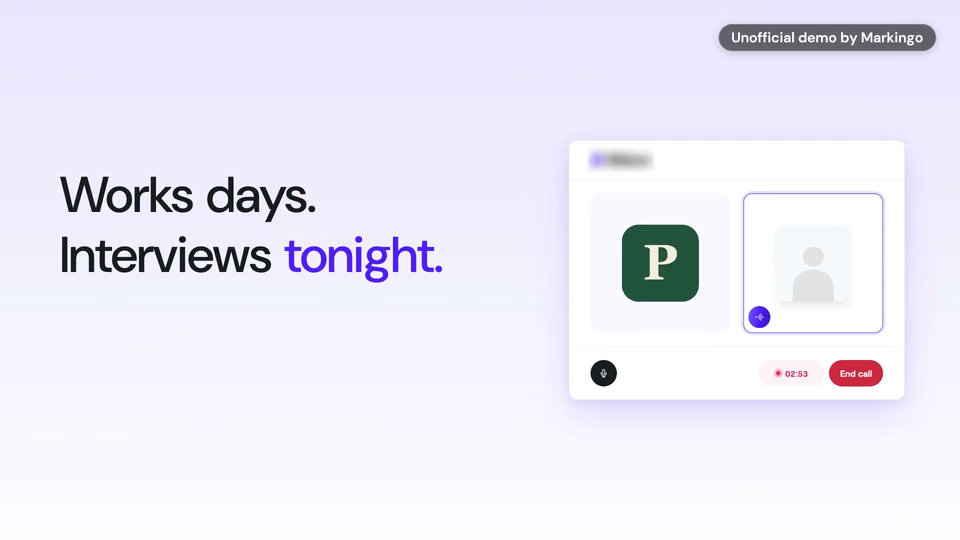
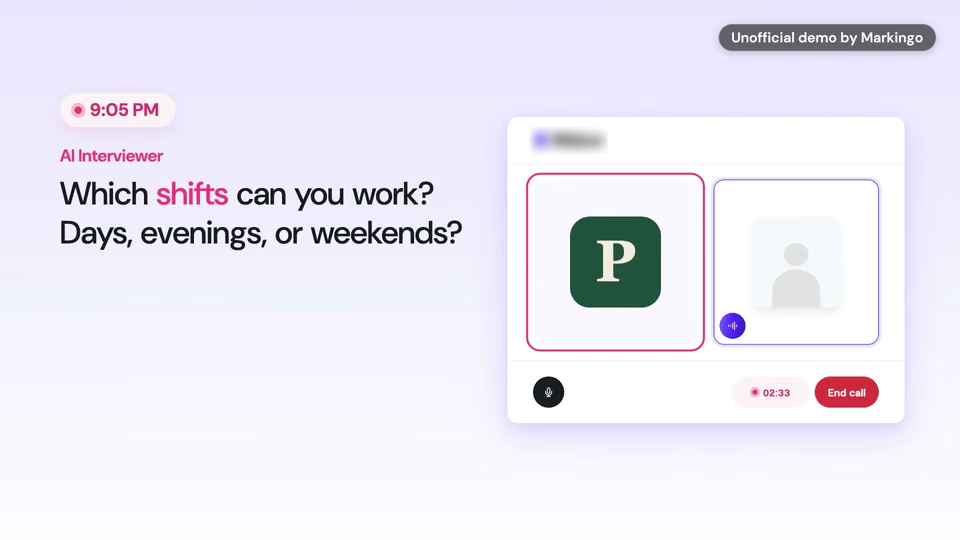
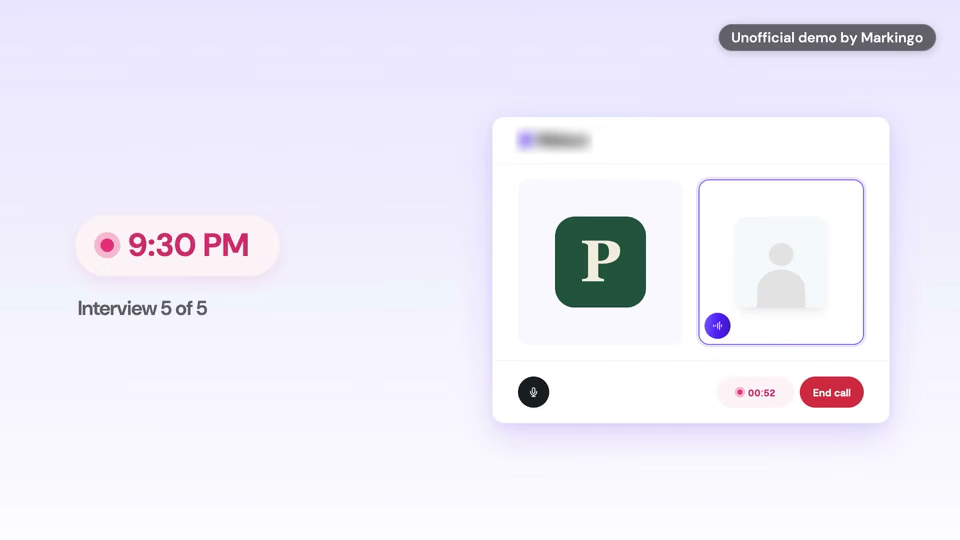
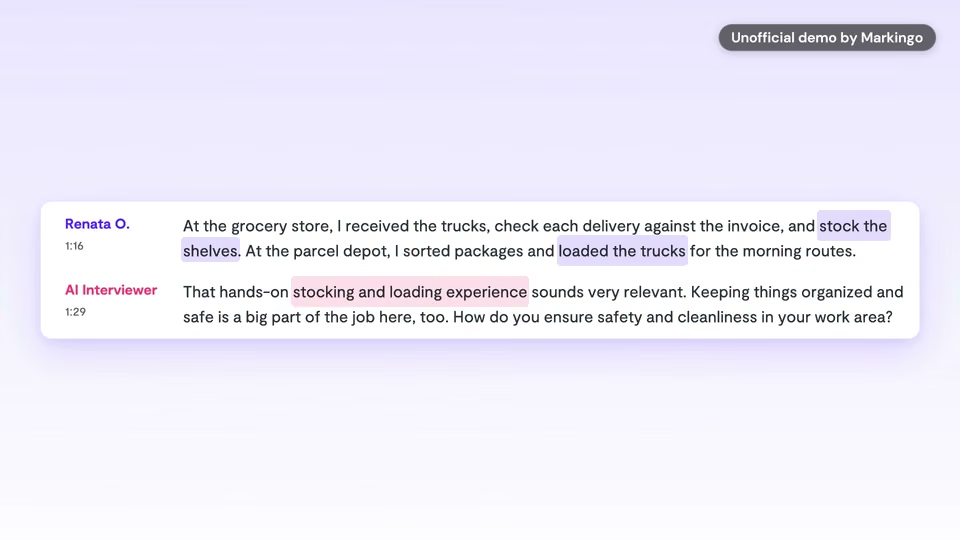
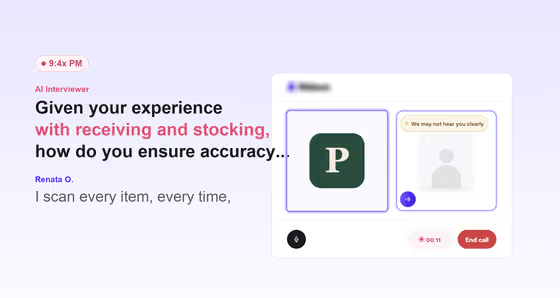
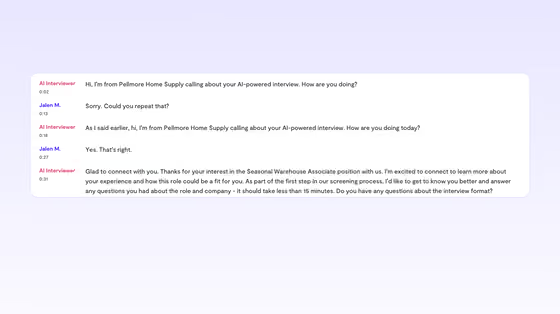
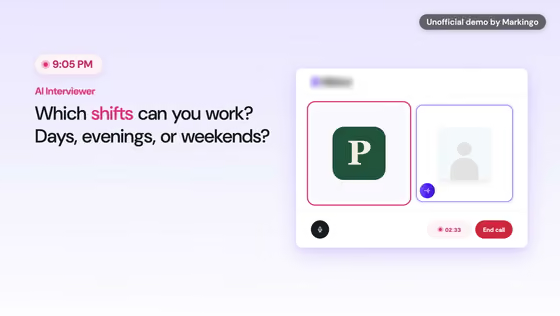
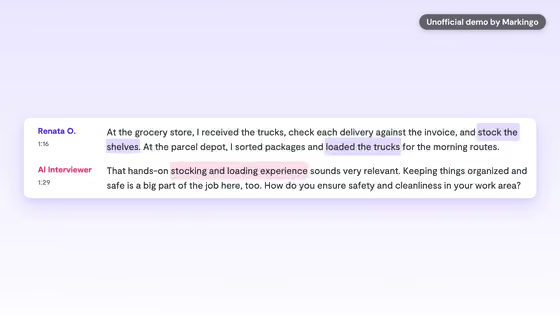
PlannedRibbon's call window on the right, and the conversation written out beside it, each voice in its own color, as in Ribbon's transcript.

WhyThe film opens on Ribbon's interviewer at work: a real question and a real answer.

ChangedWe used the question about shifts, as the real call asked it.

All of it was filmed inside Ribbon, working as it really does.

06Motion and music
For your film, we animate it

We animated it and wrote its music.

Here one click puts the candidates in order, best first. Then the music, which starts quiet under the call and builds to a steady beat.

Twice the music stays on one long chord: before Ribbon is named, and as the list is ranked.

For your film, we write its music
Play the film from 0:00. The call · 0:00 to 0:11 · Only a soft, low hum under Renata and the interviewer.Play the film from 0:11. Soft notes join · 0:11 to 0:21 · Short, soft notes come in with the narrator.Play the film from 0:21. Quiet before the name · 0:21 to 0:25 · One long chord fills the pause before the narrator names Ribbon.Play the film from 0:25. One steady beat · 0:25 to 1:03 · Bass and a soft drum join in, one steady beat from the setup to the morning.Play the film from 1:03. A bell on “first” · 1:03 to 1:06 · One long chord, the short notes stop, and a single bell sounds after the word “first”.Play the film from 1:06. Warm, no drums · 1:06 to 1:21 · The drums stop while she corrects a score, the five calls add up and Ribbon's closing line appears.Play the film from 1:21. Last chord · 1:21 to 1:24 · A final chord fades out with the picture.
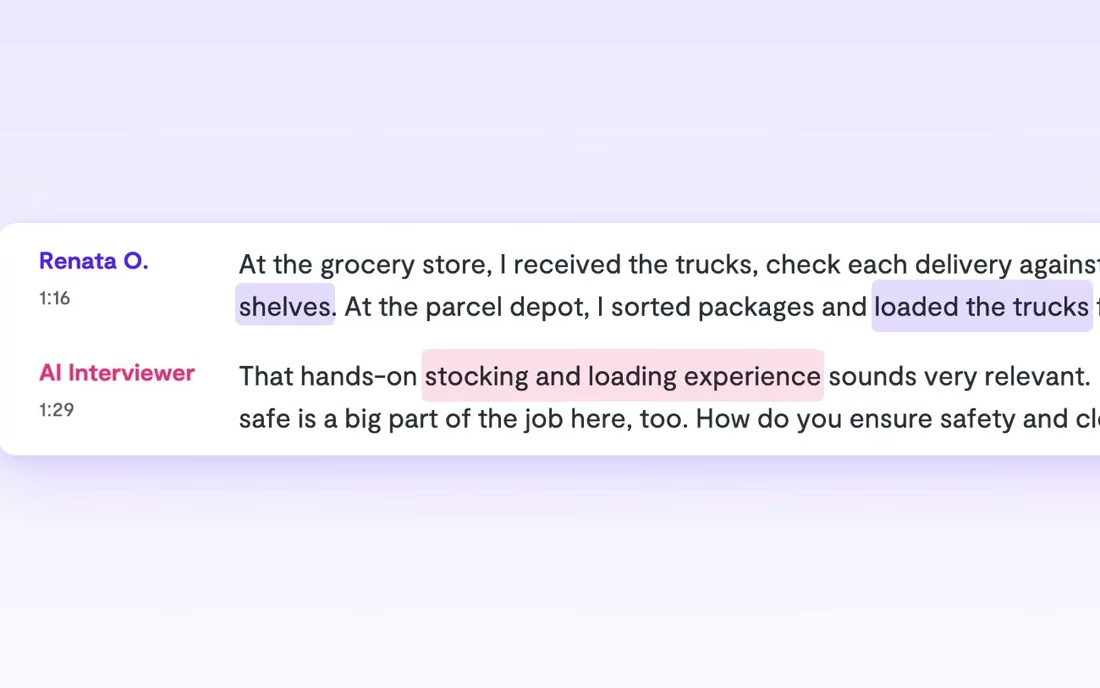
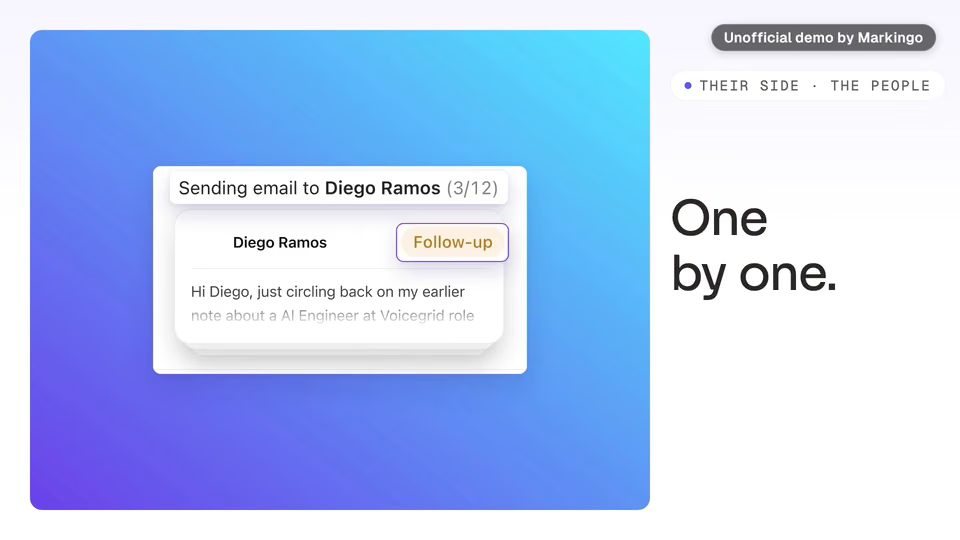
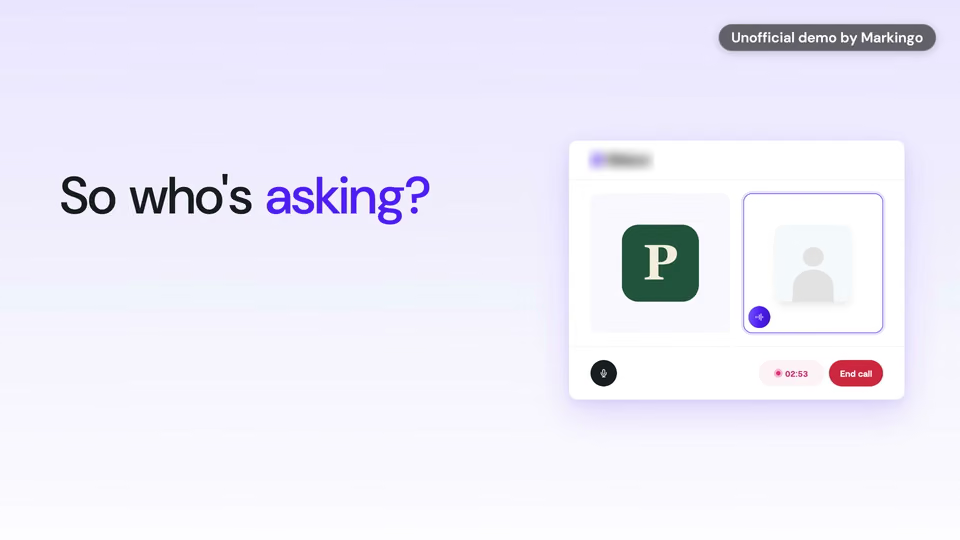
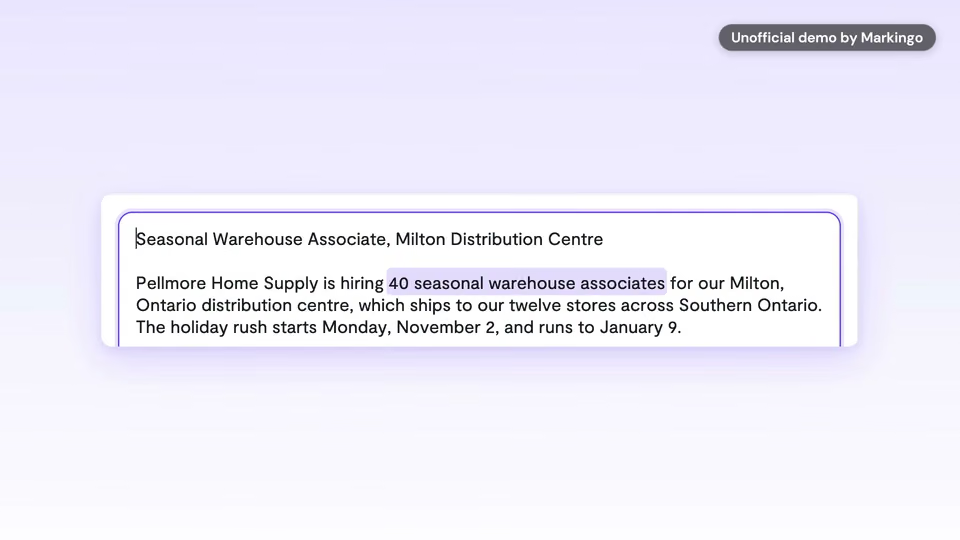
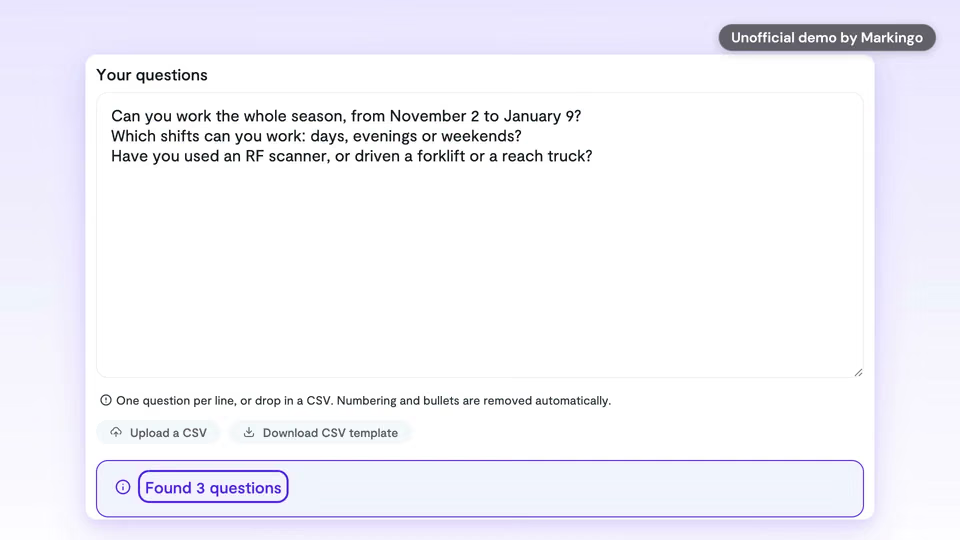
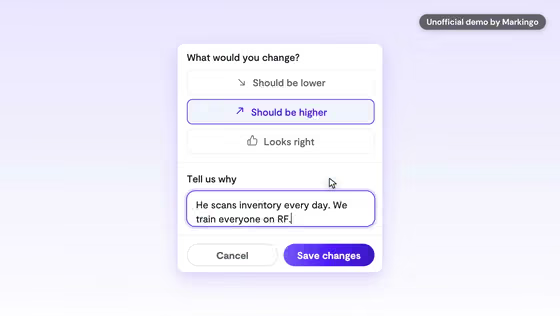
Play the film from 0:00: Which shifts can you work? Days, evenings, or weekends?Play the film from 0:06: Evenings and weekends are best for me, because I'm on the early shift at the grocery store until the new year.Play the film from 0:12: Renata works days at a grocery store... so her interview is tonight.Play the film from 0:17: And nobody from Pellmore is on call.Play the film from 0:20: So who's asking?Play the film from 0:22: Ribbon. The AI recruiter.Play the film from 0:25: Peak season doesn't wait for interviews.Play the film from 0:28: So Pellmore's recruiter pasted in the job post, forty seasonal warehouse associates, and Ribbon wrote the interview... and how to score it.Play the film from 0:37: Then she dropped in her own must-ask questions, straight from a spreadsheet.Play the film from 0:41: One link, and every applicant gets the same interview, between shifts, whenever they're free.Play the film from 0:47: And it listens.Play the film from 0:49: Renata talked about stocking and loading... so that's where her next question started.Play the film from 0:54: By the morning stand-up, every interview is a scorecard: the evidence, and the gaps.Play the film from 0:59: Scored against the questions she set.Play the film from 1:02: And the shortlist?Play the film from 1:04: Ranked, best first!Play the film from 1:06: Disagree with a score?Play the film from 1:08: Say why... and Ribbon scores the next candidate closer to how you would.Play the film from 1:12: Five interviews, twenty four minutes of calls... and nobody from Pellmore was on one of them.Play the film from 1:18: Ribbon gives recruiters their time back.
  1. Only a soft, low hum under Renata and the interviewer.

  2. Short, soft notes come in with the narrator.

  3. One long chord fills the pause before the narrator names Ribbon.

  4. Bass and a soft drum join in, one steady beat from the setup to the morning.

  5. One long chord, the short notes stop, and a single bell sounds after the word “first”.

  6. The drums stop while she corrects a score, the five calls add up and Ribbon's closing line appears.

  7. A final chord fades out with the picture.

We made 7 parts of music to go with the 161 spoken words.

07What we learned

What we learned.

Ribbon's film taught us three things: start inside an interview, show the five calls one at a time, and put only real numbers on screen.

The finished film

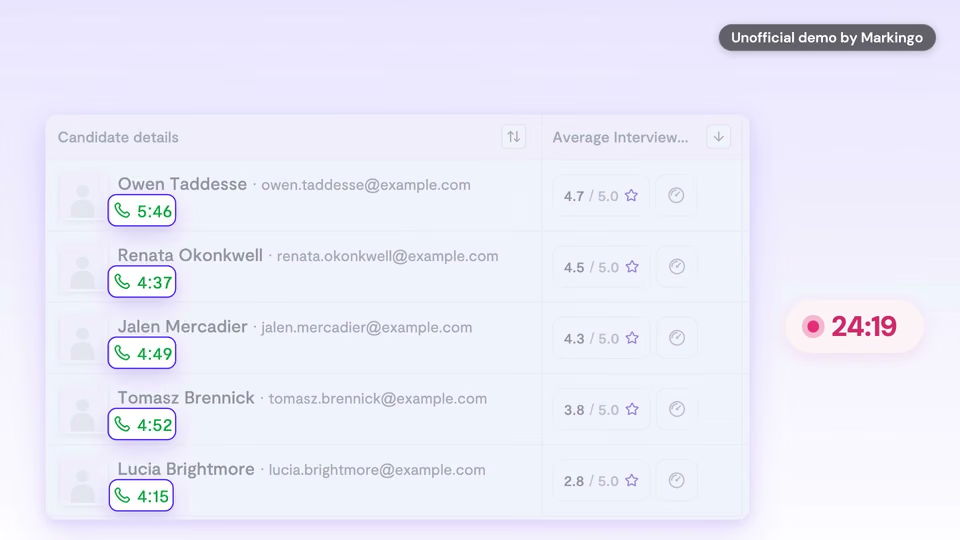
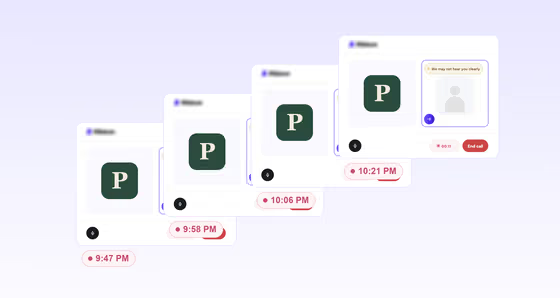
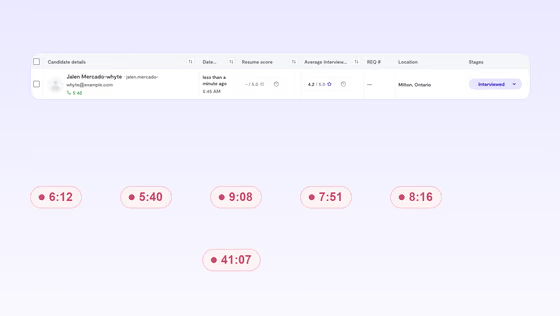
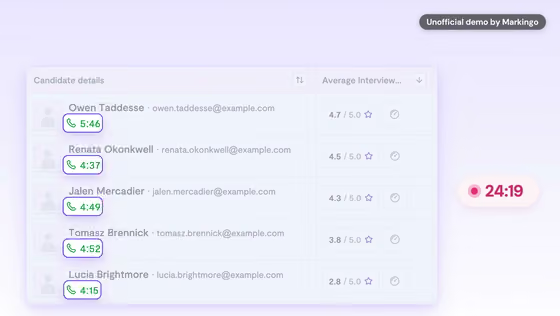
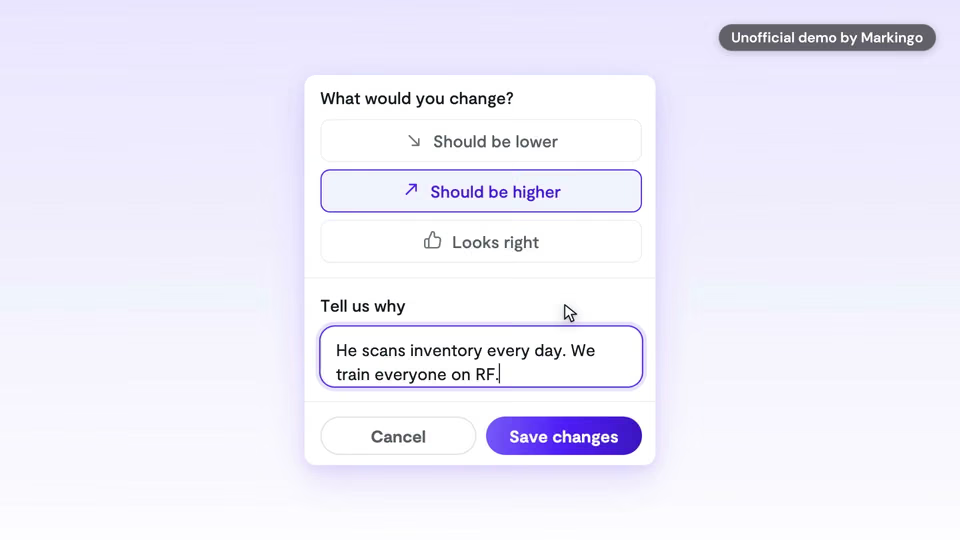
In the film the calls come one at a time, 9:05 to 9:30 PM; our storyboard stacked them.

  1. 01

    The film opens on the product doing its job, in its own voice, before anyone explains it.

  2. 02

    Real moments are easiest to follow one at a time: five calls stacked on top of each other looked like clutter.

  3. 03

    Every number on screen is real: each call shows the time it actually took place.

Try this on yours

Start your film inside the moment your product works, then show who set it up.

08Done for them
Our process, step by step

Every step, done for them.

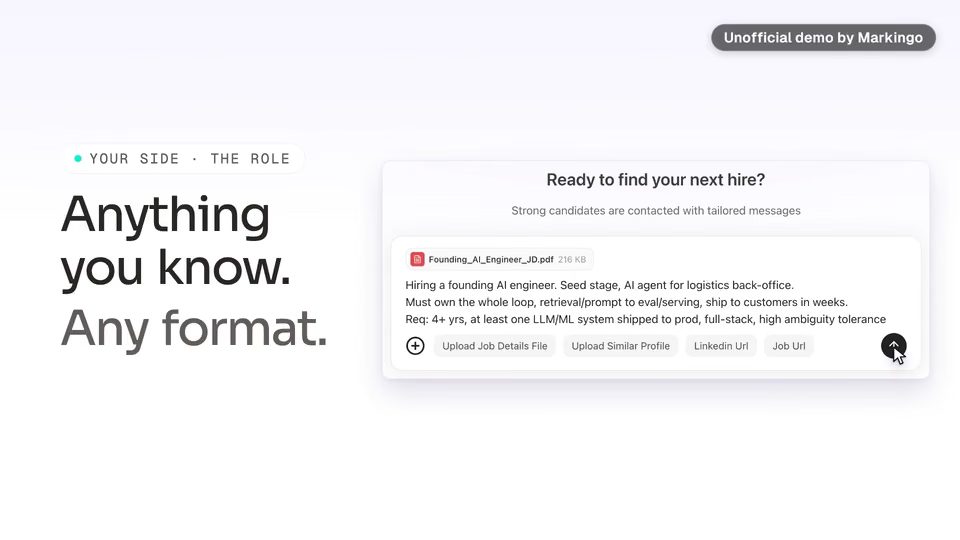
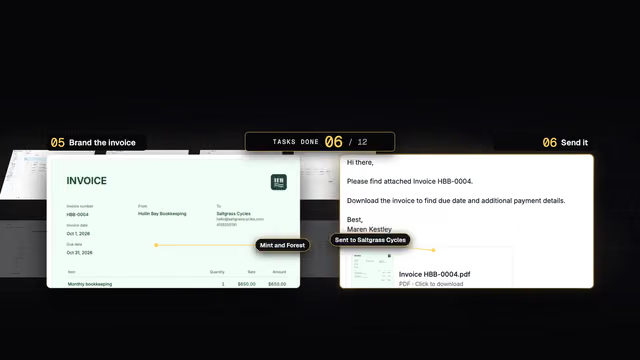
First we set up a practice job opening in Ribbon; the last thing we did was watch the finished film twice.

  1. Research and story5 steps
    1. 01We used Ribbon as a recruiter would.
    2. 02We set up a practice job opening from a job post we wrote.
    3. 03We ran a practice interview, start to finish.
    4. 04We read their site, their product updates and their posts.
    5. 05We picked the story of one night of interviews and drew every screen.
  2. Filmed3 steps
    1. 06We filmed every screen of setting up the job opening.
    2. 07We filmed five evening interviews, live.
    3. 08We filmed the morning's screens.
  3. Voiced, animated, reviewed4 steps
    1. 09We wrote every word the narrator says.
    2. 10We colored the film in Ribbon's purple and wrote the music.
    3. 11We animated eleven drafts and checked each one.
    4. 12Two reviews later, the film was done.

Our part

Everything from the practice job opening to the finished film.

Ribbon's part

Your part

Tell us your website.

Your turn

Your first film is on us.

You pay nothing, and it's ready in 48 hours.

Every step on this page, done for your product. Tell us what to change, as often as you like.

  • 48hYour film in under 48 hours
  • Every stepOn this page, included
  • YoursTo keep, even if you don't like it
11Words and sources

The film's own words.

Everything you hear in the film, word for word, with the time it is said. Choose a line to play from there.

The work behind this film

sources read
21
rival films watched
4
ideas written
3
storyboards drawn
14

Every word said in the film, in order.

  1. Ribbon's interviewer

  2. Renata, a demo candidate

  3. Narrator

Show all 20 lines

21 sources read for this film

The sources this page cites come first, numbered as you meet them; then every other source we read. All links accessed November 6 or 7, 2026.

References and data 3

  1. 16Structured interview (opens in a new tab) Wikipedia · reference
  2. 17Short list (opens in a new tab) Wikipedia · reference
  3. 20Ribbon interviews: how they work for candidates (opens in a new tab) Career Upside · guide