
HOMEOWNER GUIDE
What a flooded basement costs.
The question every caller asks first, answered before they have to ask it.
Restoration · written for 1 cityread →
Before anybody rings you, they look something up: what it costs, how long it takes, whether insurance covers it, whether they can leave it until Monday. We answer those questions properly, 1 post a week on your domain, written for your trade in the cities you actually serve.
An ad stops the day you stop paying for it.
A good answer keeps working while you sleep.
Write the answer.
A post is the answer you give on the phone, written down once and left where people can find it. Answer enough of them properly and you have a site that sells the job before you have spoken to anybody.
All 12 posts in the quarter are decided before the first paragraph is written. That is what keeps the cadence steady, and it means every topic traces back to a question somebody actually asked or typed.
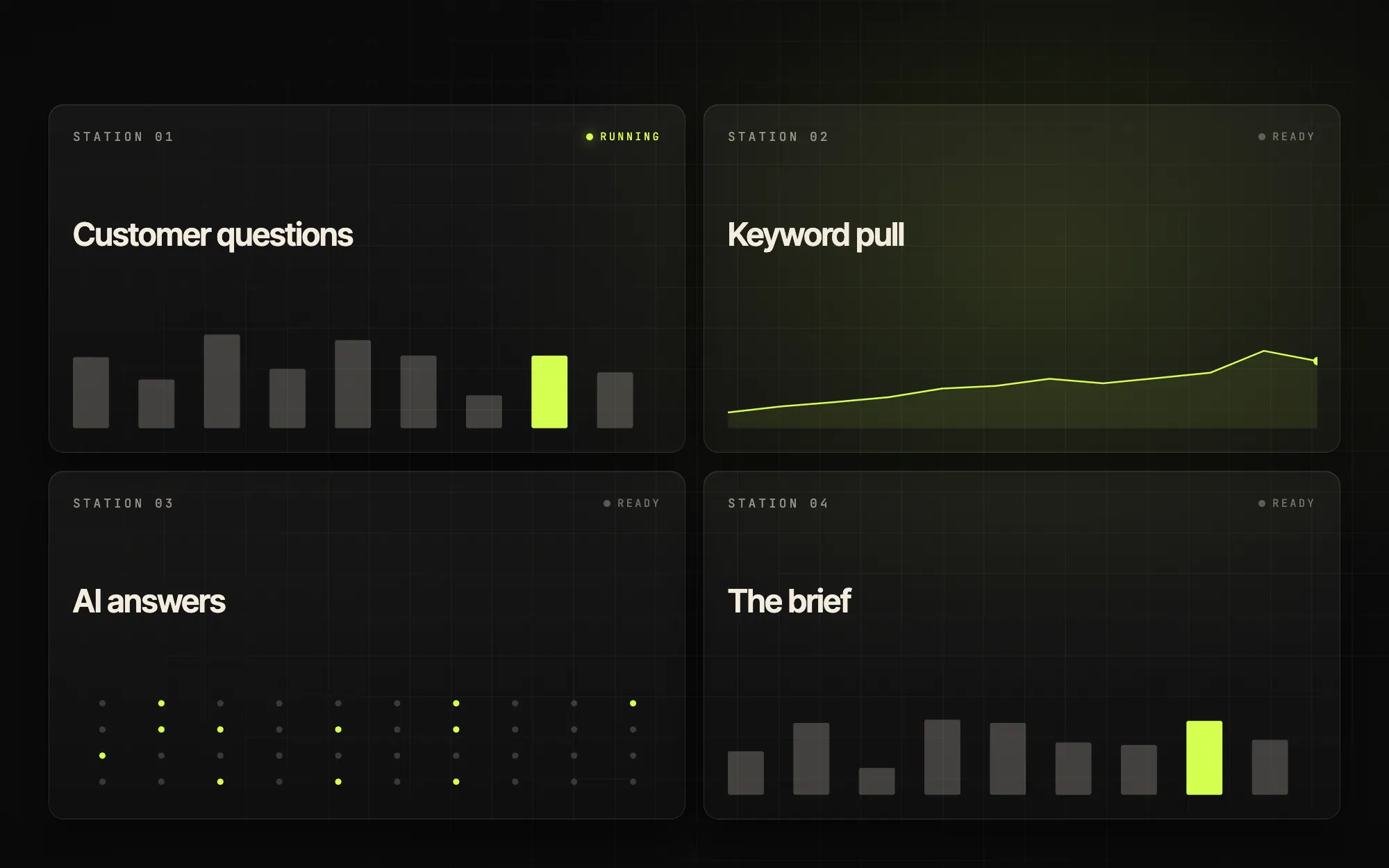 research.console
We listen to how your customers ask for help: the phone calls, the quote requests, the questions your estimators answer on every doorstep. Those questions are the posts, in the words the customer used.
A keyword pull for your trade in your cities, saved as a raw export. It tells us which questions people are actually typing, how often, and which ones a business your size can realistically rank for.
For every topic we look at what Google returns and how ChatGPT, Perplexity and AI Overviews answer the same question. A post written as a plain answer works in both places, so we write it that way once.
We read what already ranks for each question. Some of it is thin, some of it is national copy that never mentions your city. The brief says, per post, exactly what yours will answer that the current results do not.
Before any writing starts you have 12 titles, 12 briefs and 12 publish dates in front of you, and you sign them off. The calendar is the thing that keeps a post landing every week for a year, long after the enthusiasm wears off.

Every post gets images made for it, in your colours, built around photographs of your own jobs wherever they exist. A reader can tell the difference between a real van in a real driveway and a stock photo, and so can a customer.
 images · made per post
Every header and diagram is made for the piece it sits in. Where you have photographs of your own jobs, those come first, because a real van in a real driveway beats a stock photo every time.
Images are built at a size that stays crisp on the phone most of your readers are holding, and set in your colours so the post looks like the rest of your site.
Where a job is easier to show than to describe, we draw it: where the water gets in, what a survey covers, what the crew does on day 1. Labelled in plain words.
Everything we make lands in a folder on your side. Use it on service pages, quotes, social posts, or the van. It is your artwork.

The question every caller asks first, answered before they have to ask it.
The plain answer, the rules that apply to a renovation, and when a survey is worth booking.
Frozen lines, split pipes, and what a homeowner can safely do before the van arrives.
What is happening in 1 suburb, written for the people already searching that suburb.
1 job walked through in photographs, from the first site visit to the final invoice.
The honest version of the answer, which is usually the one that earns the callback.
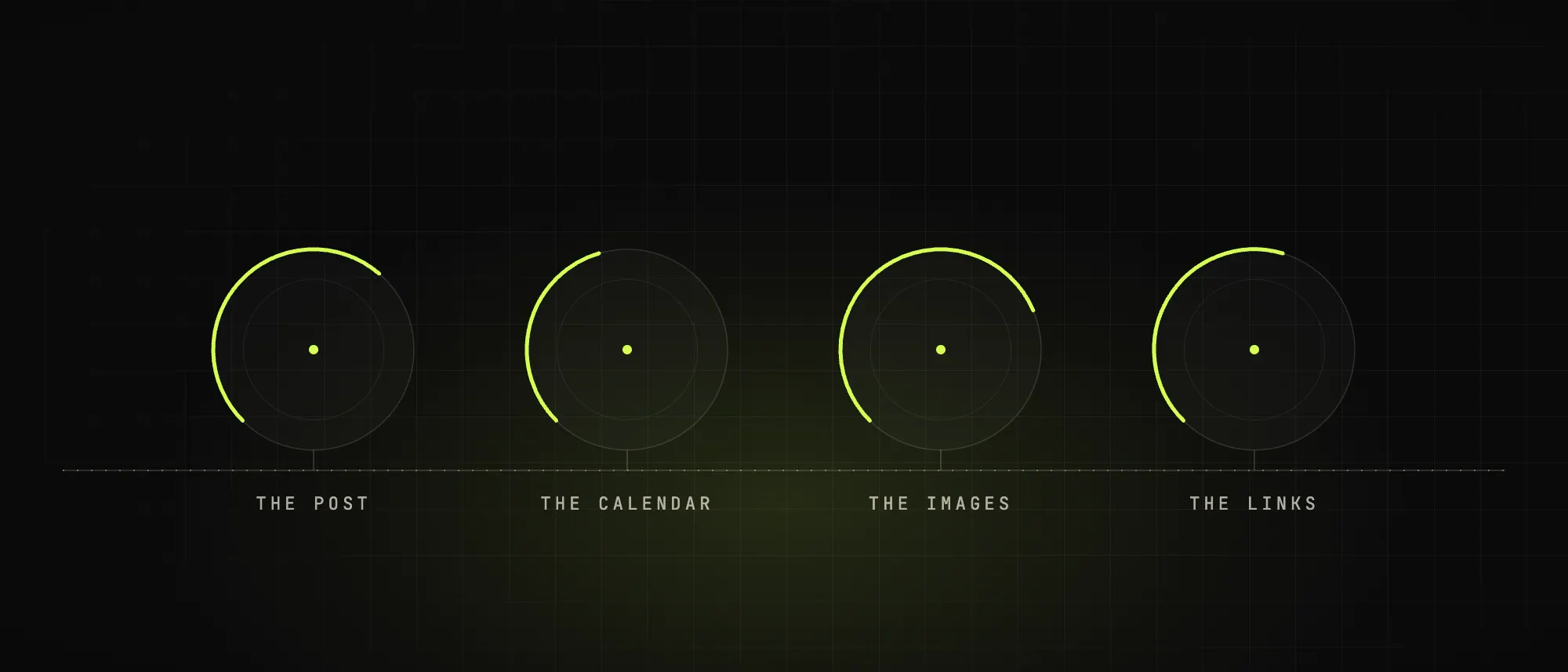
The question, the city, and what the post has to answer, taken off the calendar and confirmed.
Written as a straight answer, with the costs, the timelines and the caveats a caller would ask about.
An editor reads it end to end, cuts what does not earn its place, and checks every claim.
Images made for the post, in your colours, using your own job photos where they fit.
Live on your domain, with the on-page setup, structured data and links to your service pages.

First drafts do not ship. An editor reads every piece end to end, cuts what does not earn its place, and checks the parts a customer would hold you to: the costs, the timelines, the safety advice, the promises. Then you read it, and it publishes when you say so.
A fixed monthly scope, agreed up front. Everything below comes with it, published on your domain, in your account.
Research before any writing
Your customers' questions, a measured keyword pull for your trade and your cities, and what already ranks. Written up first.
A 12-week calendar
Every title, brief and publish date agreed in advance, so the topics are settled before the quarter starts.
A post a week
Written by somebody who has learned your trade, then cut by an editor before it goes anywhere near your site.
Images made for the post
In your colours, built from your own job photos where they fit. Yours to reuse anywhere.
On-page setup and structured data
Titles, headings, internal links to your service pages, and the markup Google and AI answers read first.
Sharing where your customers are
The post cut down for the places you already post, plus something your crew can send a customer.
Monthly reading of the numbers
A short review: what people found, what they read, what to write more of next month.
Who actually writes these?
Do you use AI to write them?
What happens if a post does not get found?
How is this different from the service pages?
How quickly does it do anything?

Week 1: the research, and the questions your customers actually ask. Week 2: the 12 week calendar, agreed with you. Week 3: the first post live. Then 1 a week, for as long as you want it running.
How we think about this work, in long form, with every outside number linked to its source.

Blue links pay out less every year. The playbook for being cited in ChatGPT, Perplexity and Google AI Overviews: citable passages and brand mentions.
Read the piece
Google calls it scaled content abuse. How to build programmatic pages that hold up through the 2026 spam and core updates: make each page the database.
Read the pieceSend your domain, your trade and the cities you serve. We come back with a sample 12 week calendar of the questions worth answering.

A 30-minute call. Tell us the work you want more of and the areas you serve. We’ll show you the searches happening there now, the pages it would take to cover them, and what that costs at $50 a page. You keep that whether or not you hire us.