Creative design for local service businessesOne brand.
On every surface.
Same voice.
A busy trade ships a lot of small things: ad versions, yard signs, a wrapped van, a home-show banner, brochures, before-and-afters. Each one is a chance to look like the same company or three different ones. Our retainer holds the system type, color, grid, motion, voice, across every surface, brief in, ship-ready out.
Most studios ship assets.
We ship the brand system.
That difference is the entire pitch.
Brand consistency across a lot of surfaces isn’t a willpower problem, it’s an infrastructure problem. A real brand system lives in Figma as tokens, kept current, with every asset pulling from it. We just decided to run it that way, so everything that ships reads like one company.
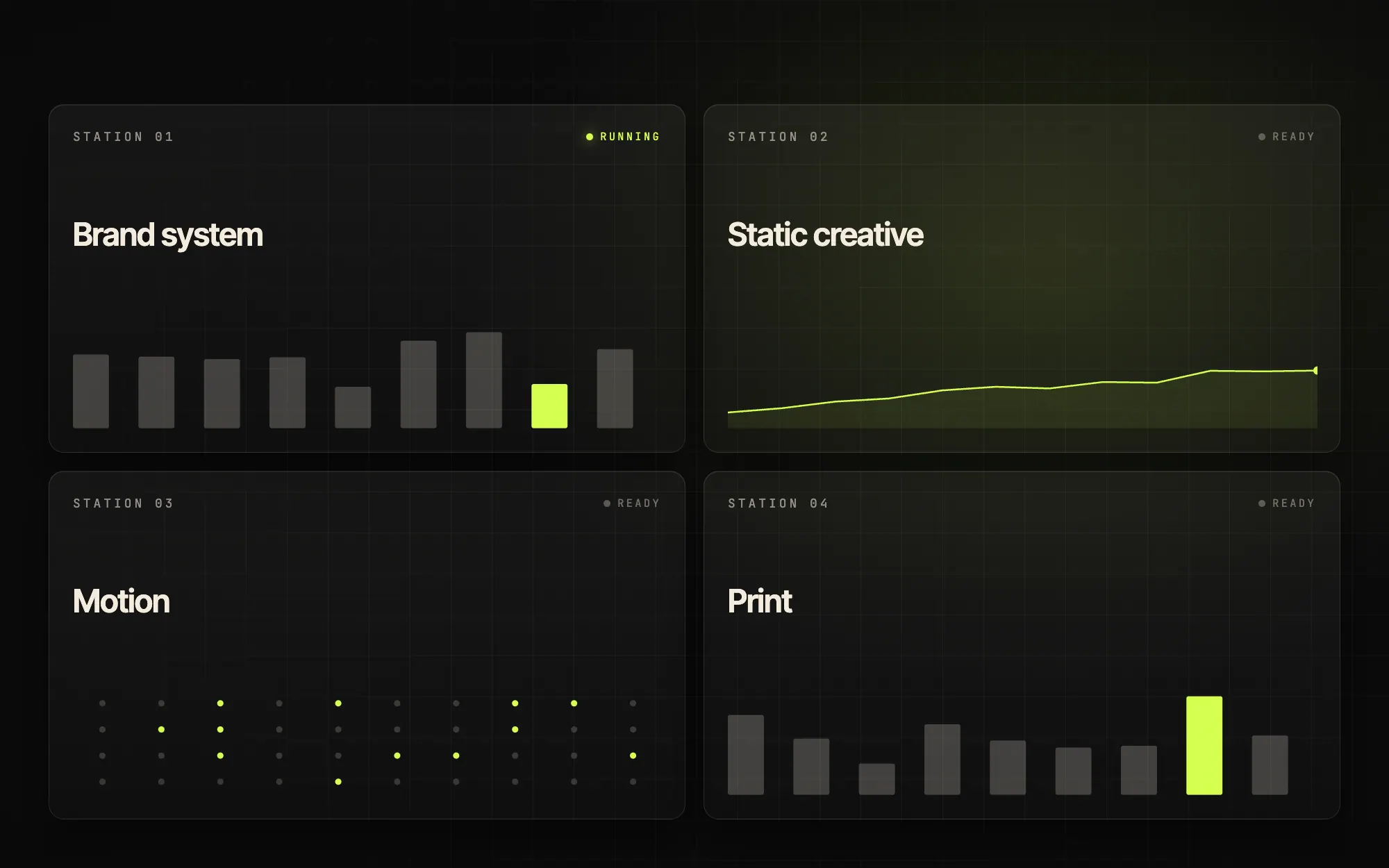
Four benches. One brand system.
System, static, motion, print. Each bench owns one slice of the brand. They share the same tokens, the same grid, the same voice, so a van on the road and an Instagram Reel read like the same company.
 the.studio
- Bench 01
Brand system
Most brand books are PDFs nobody opens. We run yours as living infrastructure, type specimens, color tokens, grid rules, motion language, voice rules, wired into Figma, codified per surface, version-controlled. Every asset downstream is consistent because the system upstream is a system, held and kept current.
- Bench 02
Static creative
Ad units, one-pagers, yard signs, van and truck livery, job-site boards, service brochures, estimate and invoice templates, social cards, banner ads, email headers, review cards. All from one design system, typeset to system, photographed to system, gridded to system. Briefed on Monday, through the bench by Friday, on a different surface every week.
- Bench 03
Motion creative
Looping social cuts, animated ad units, before-and-after reveals, job-site clips cut for Reels, title cards for your review videos, hero-video frames. Motion designed to live alongside the static system, same type, same color tokens, same grid, so the brand reads as one thing across everything you post.
- Bench 04
Print + event
Home-show booths, trade-show banners, yard signs, site hoarding, vehicle livery, door hangers, uniforms, swag, perfect-bound reports. The physical end of the brand system, printed on the right paper, in the right ink, at the right size, with the same typesetting discipline as everything else you ship.
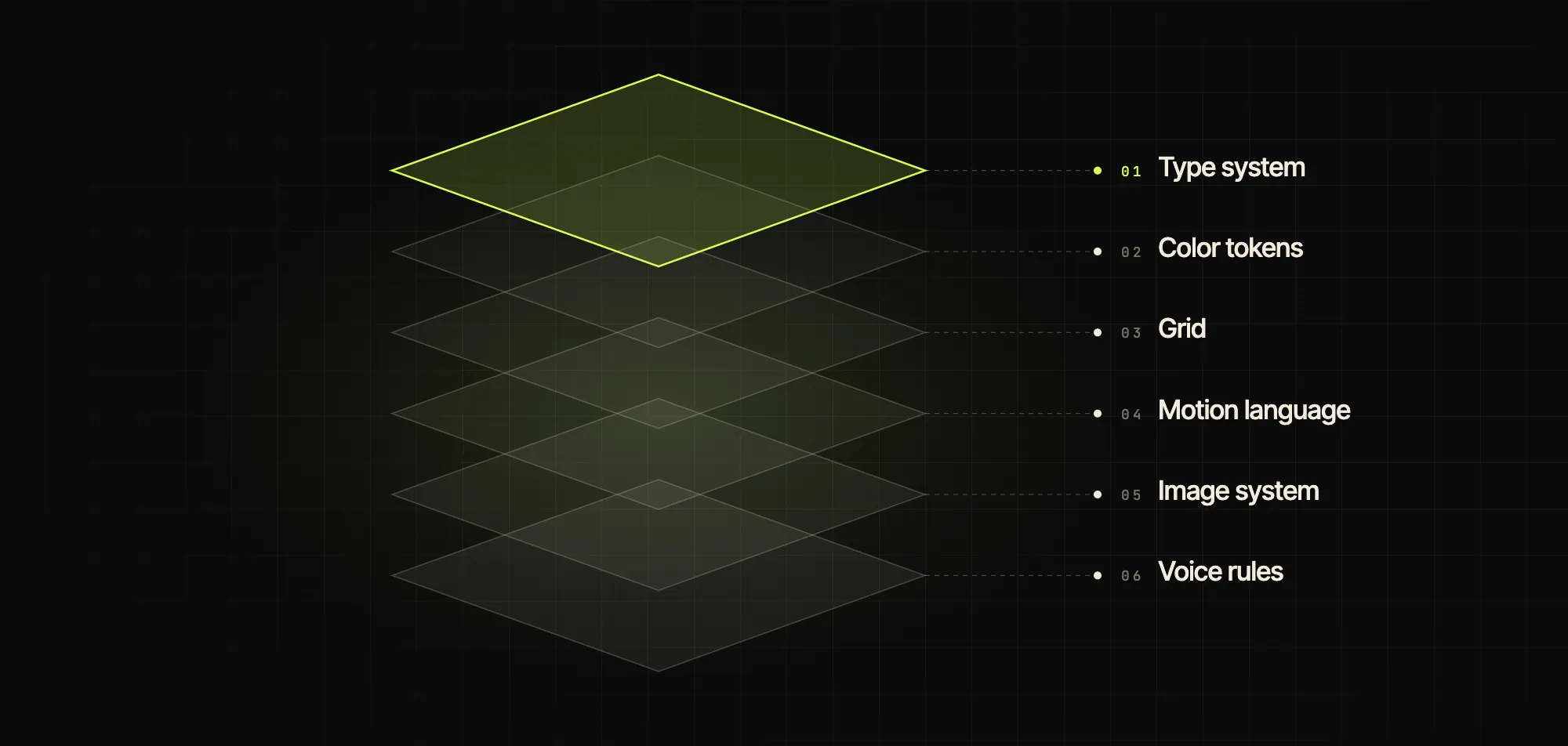
Six layers. One coherent system.
Every asset that ships is the surface output of six underlying layers. Get the layers right and the surfaces hold up across years; get them sloppy and every new vendor introduces a new dialect of your brand.
- /01
Type system
One family set · per-surface scale · spec'd letter-spacing.
- /02
Color tokens
Named semantic tokens, referenced by every component and export.
- /03
Grid + spacing
8-pt baseline · per-surface column system · ruler-locked margins.
- /04
Motion language
Easing curves · timing constants · entrance / exit / loop primitives.
- /05
Image system
Photo direction · illustration system · iconography rules · alt-text discipline.
- /06
Voice rules
Tone, length, italic-pull conventions, line-break opinions, copy reads on-brand.
 qa · 5 checks
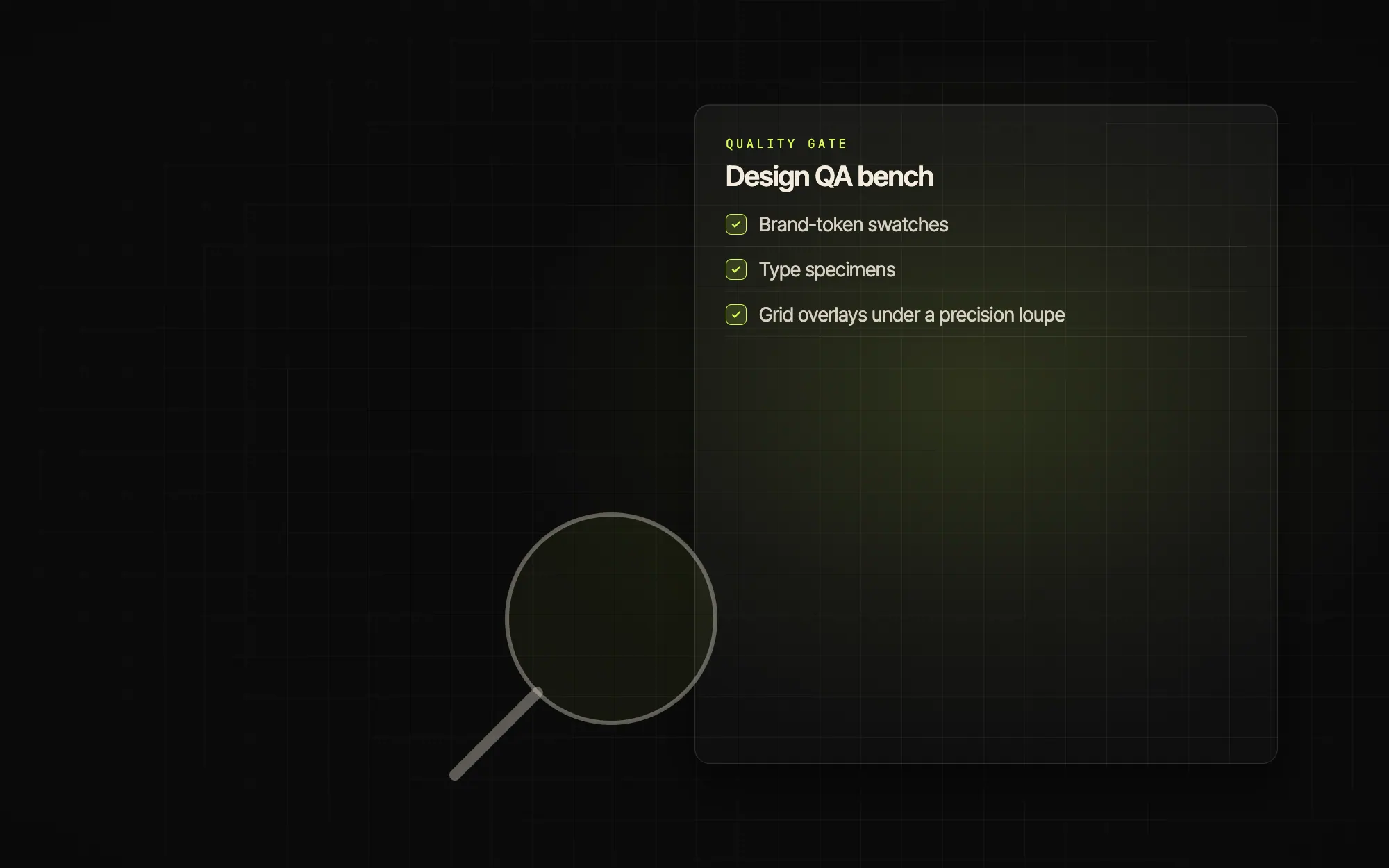
Five checks. Zero off-brand.
Every asset clears five checks before it leaves the studio. System, surface fit, accessibility, copy, final proof. No file ships without a senior designer’s signature on the print proof or the motion frame review.
- /01
Brand-system check
Type, color, grid, spacing, motion timing, all checked against the system tokens before the asset leaves the bench.
- /02
Surface fit
Asset specs verified per surface, Meta feed, Reels, US-Letter print, large-format vinyl, vehicle wrap, screen export.
- /03
Accessibility
Contrast ratios held above WCAG AA, alt-text written, motion respects reduced-motion preferences, type sizes hit minimums.
- /04
Copy + voice review
An editor signs off the words as well as the layout. Italic-pull, line breaks, capitalization, all on system, read line by line.
- /05
Final proof
Senior designer signs the file. Print proofs go to a physical proof. Motion gets a frame-by-frame review. No hand-off without signature.
Five days. One asset shipped, on system.
- MON
Brief
Brief intake, surface scoped, deadline locked, brand-system tokens pulled, all by 11am.
- TUE
Draft
First-pass design shipped to staging by EOD. Senior review queued for first thing Wednesday.
- WED
Iterate
Senior + brand review, copy refinement, surface-fit checks. Up to two revision rounds before lock.
- THU
QA bench
Brand-system check, accessibility audit, surface-spec validation, copy sign-off, five-stage gate.
- FRI
Ship
Production files exported per surface, linked in Figma, dropped in your asset library, briefed for handoff.
Anyone can ship a poster. We hold the system, across every asset, every surface, and a brand that has to read as one thing.
Type-spec discipline, color-token hygiene, grid review, motion timing, the unglamorous work that lets a truck on the highway, a home-show booth, and a Facebook ad all speak in the same voice.
What the studio actually ships.
- /01Onebrand system behind every asset that ships
- /02Everysurface on the same type, color and grid
- /03Unlimitedrevisions inside the retainer, until it's right
- /04In housedesign, motion, print and copy from one team
- /05Signeda senior designer signs every file before it ships
- /06Livingbrand system in Figma, kept current as you grow
Every retainer, scoped & shipped.
Fixed scope per retainer. Brand system, ad creative, quoting collateral, signage, editorial, web, asset library, all from one design system, all shipping through the same five-stage QA gate.
- 01
Brand system audit + build
Type, color, grid, motion, voice, codified in Figma, wired to your design tokens, kept living.
- 02
Ad creative (static + motion)
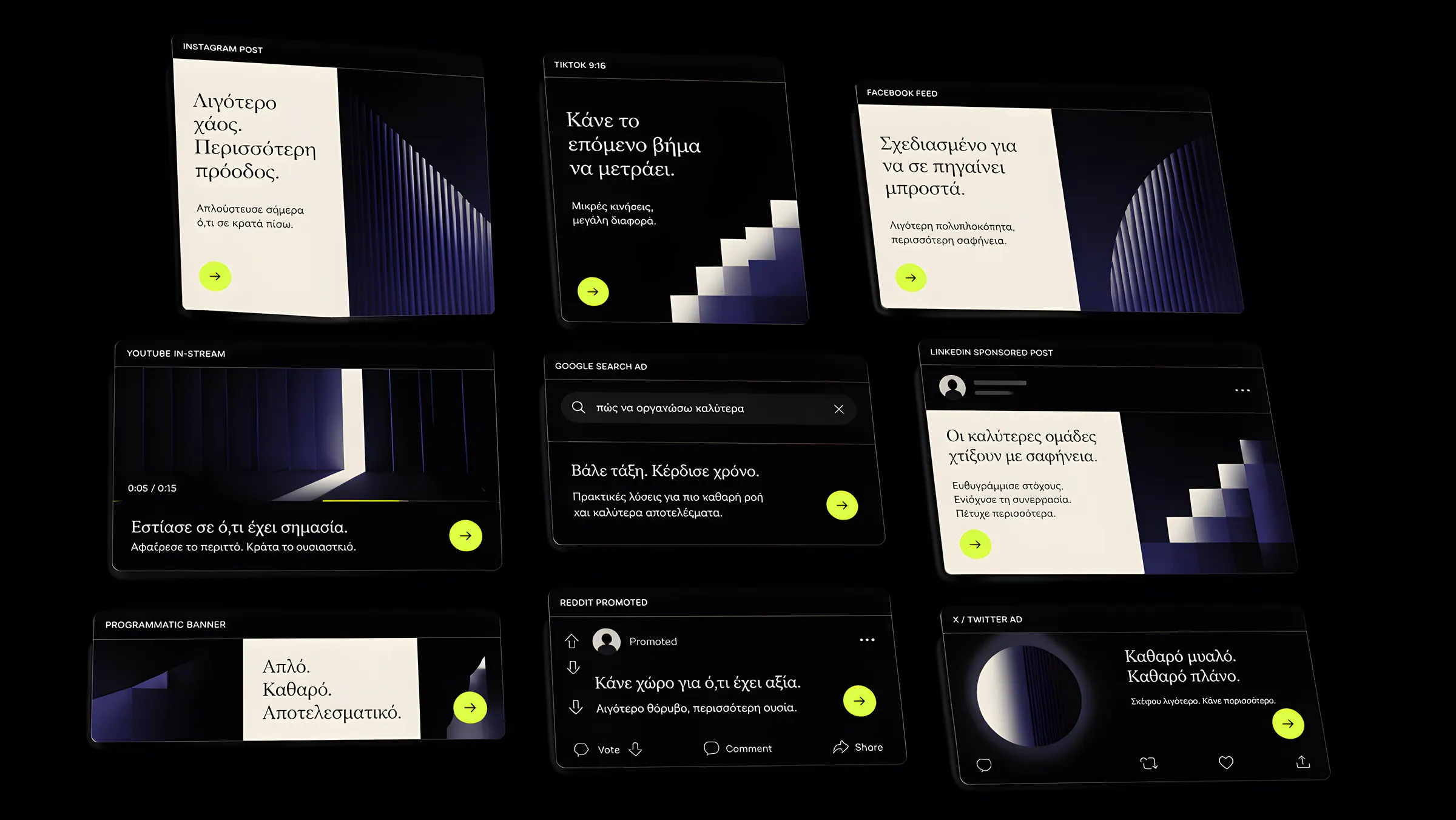
Per-platform versions for Google, Meta, LinkedIn, TikTok, YouTube, refreshed weekly.
- 03
Sales & quoting collateral
Estimate templates, service brochures, one-pagers, case studies, before-and-after sheets, email headers.
- 04
Event + signage assets
Home-show booths, banners, yard signs, vehicle livery, site hoarding, uniforms, production-ready files per printer.
- 05
Editorial + report design
Long-form reports, bound publications, inspection and scope documents, typeset to print discipline.
- 06
Web + booking collateral
Marketing-site components, quote-form moments, review-request cards that match the brand system.
- 07
Asset library + ops
Figma library, exports per surface, naming conventions, version control, your team can self-serve.
Boring tools. Sharp output.
We’re tool-agnostic, the system holds the discipline, not the software. The stack is selected to be the one your team can self-serve from after the retainer ends.
- Brand systemFigma · component lib · design tokens · variants
- Static creativeFigma · Photoshop · Illustrator · spec sheets
- MotionAfter Effects · Lottie · Rive · Cavalry
- Print + eventInDesign · printer-spec PDFs · proof workflow
- Editorial + webWebflow · Framer · CSS-token export
- Ops + handoffFigma library · shared brief desk · asset CDN
What owners ask on the second call.
- 01
Why a retainer instead of paying per project?
- A business that is out in front of people needs a steady trickle of small things: a new ad version, a yard sign for a job that just started, a truck getting wrapped, a brochure for the home show, a fresh set of before-and-afters. Project pricing punishes that, because every asset is a new quote, a new brief, and a new vendor to bring up to speed. A retainer gets you a studio on call and one team holding the brand across all of it.
- 02
What's actually in the retainer?
- An always-on creative team, designers, motion, copy and brand systems, working through your queue in the order you set. Unlimited revisions inside the retainer. The Figma library lives with you and stays yours. Senior creative direction held by us across every output. Cancel any month with 30 days' notice.
- 03
Will it look on-brand or generic?
- Brand consistency is the entire reason a creative retainer is worth more than a freelance pool. We start with a brand-system audit and build, type, color, grid, motion, voice, codified in Figma as living tokens. Every asset downstream comes from those tokens. A couple of months in, your brand reads as one thing across surfaces where it never used to, because the system upstream is finally a system.
- 04
Can you work with the person who already does our design?
- Yes, and it's where the model works best. Most owners already have someone who handles the odd flyer or the truck wrap, and they get buried in the long tail while the bigger pieces wait. We build the system and run the long tail inside it, so their work and ours come out looking like the same company.
- 05
How do you handle motion and video?
- Motion is a first-class citizen. We design motion alongside static, same type, same color tokens, same easing curves, so a brand reads as one thing across surfaces. For full-cinematic film and the flagship 8-second cut, our video service handles the heavy production. For social cuts, ad units, before-and-after reveals, title cards and web animations, the design retainer covers it directly.
One brand.
One system.
Every surface.
Week 1: brand-system audit and Figma library stand-up. Week 2: queue intake, naming conventions, surface specs locked. From there: a weekly creative cadence through the bench, and a monthly system review.
The method, written down.
How we think about this work, in long form, with every outside number linked to its source.
 Landing pages10 min read
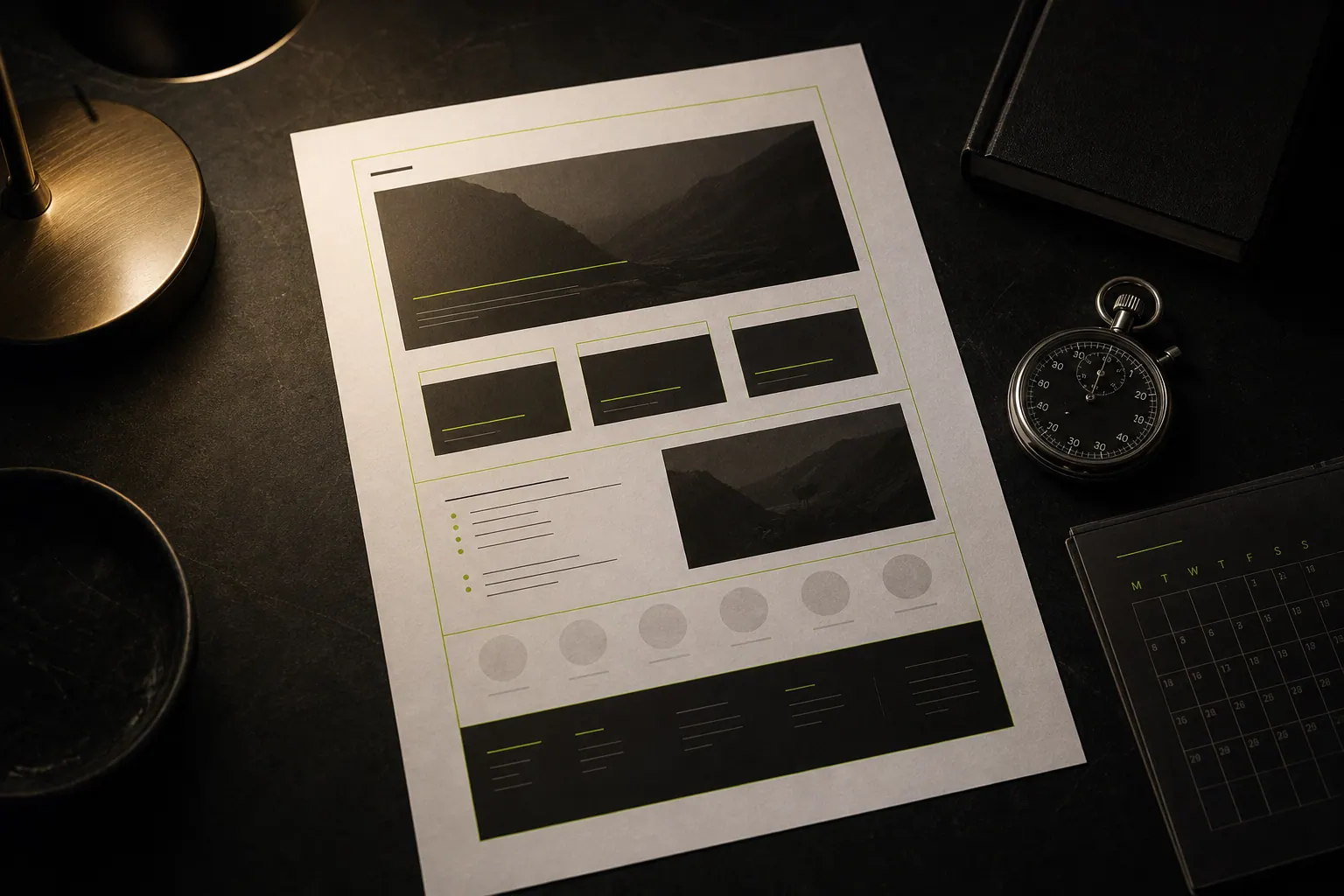
High-Converting Landing Page Design: The System We Run
The landing page system we run for local service businesses: positioning, conversion copy, design, build and instrumentation, in a fixed order that holds.
Read the piece Video10 min read
Video production for local service businesses, run as a monthly line
A monthly video production line for service businesses: 4 stations, a weekly cadence, and a banked B-roll library, so your channels never go dark.
Read the piece Direct mail9 min read
Direct Mail for Local Service Businesses: The System Behind a Bound Report
Why a researched, bound report still gets read when cold email does not, the operations layer that makes it repeatable, and the account math behind it.
Read the piece
Pairs well with.
Want a single design ticket as a proof?
Send the brief. Brand-locked first draft back, on us.
Want the phone to ring?
A 30-minute call. Tell us the work you want more of and the areas you serve. We’ll show you the searches happening there now, the pages it would take to cover them, and what that costs at $50 a page. You keep that whether or not you hire us.