
10,000 pages.
Each one earns
its index slot.
Most programmatic SEO is rebranded spam, templates spinning paraphrase over thin data. We engineer the opposite: real first-party data, a five-stage uniqueness firewall, and index-ops discipline that lets a 10,000-page surface compound for years instead of getting deindexed in a quarter.
Templates aren’t the problem. Templates with no data, no firewall, and no ongoing audit are. We build the kind of programmatic surface that ages like a Wikipedia category, not like a 2014 link farm.
A page is a unit of trust.
Spin it and the trust collapses.
Earn it and it compounds for years.
Pages at scale.
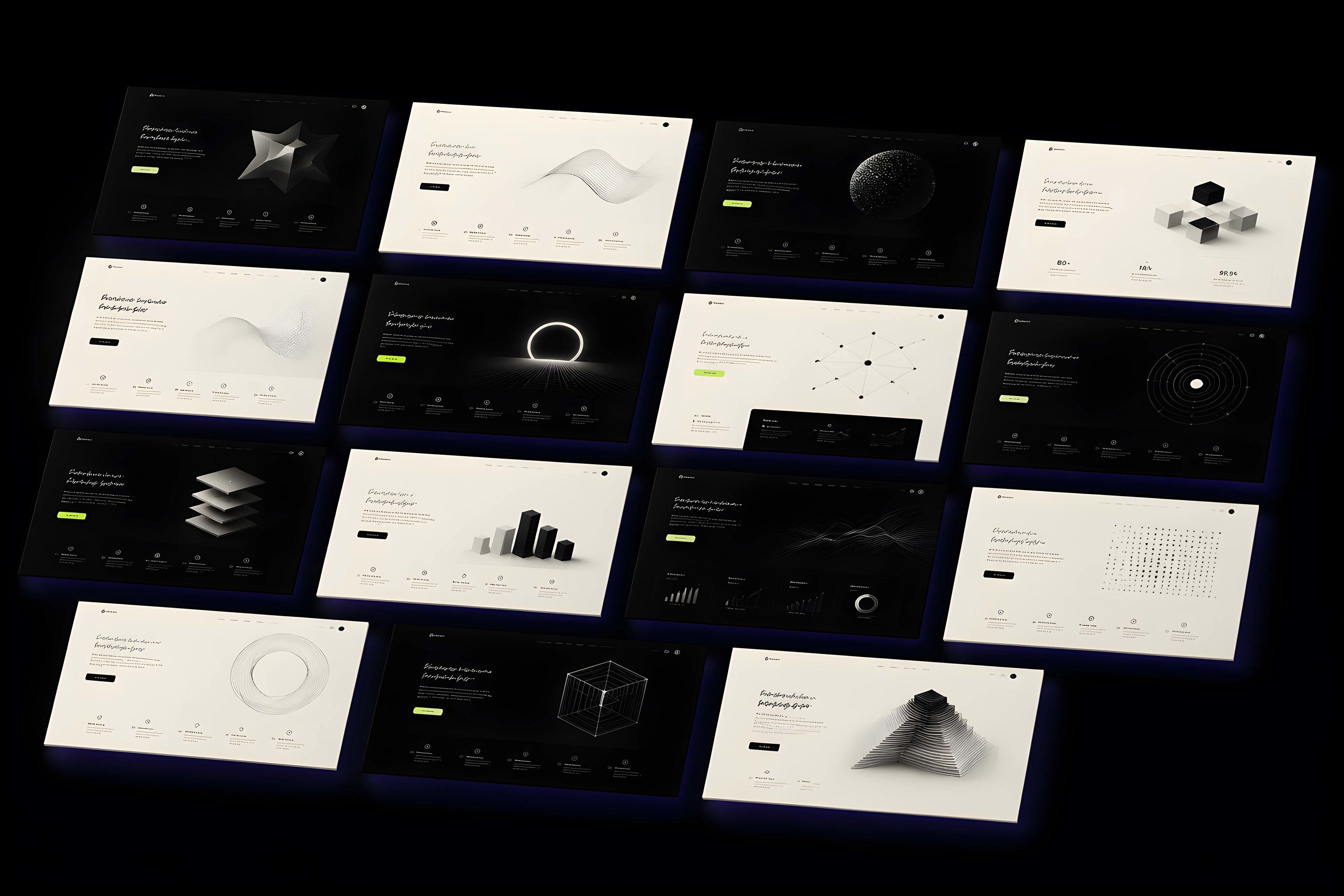
One page tile becomes nine. Nine become a tessellated cathedral of premium pages stretching into deep perspective. The programmatic surface as architecture.
Four stations. Ten-thousand URLs.
Template, data, firewall, index. The four desks that have to run together to ship a programmatic surface that actually deserves the traffic, and keeps it two years later.
 template.console
- Station 01
Template architecture
We design the shape of a single page type, the slots, the priority hierarchy, the schema spine, the variant rules, before a single URL gets built. The template is a product spec; every page that inherits from it is a serialized instance.
- Station 02
Data engineering
First-party data, scraped public sources, partner feeds, internal product signal, normalized into a single content lake with provenance, freshness, and validation guarantees. If the data source dies, we know before Google does.
- Station 03
Uniqueness firewall
Every templated page passes through a five-stage uniqueness gate before it ships, token-level dedup, semantic-similarity score, intent-coverage check, value-density audit, and a manual-action sample. Pages that don't earn their slot don't get one.
- Station 04
Index ops
Sitemap segmentation, IndexNow submission, log-file analysis, index-coverage monitoring per template family. If Google starts dropping a cluster from its index, we see the curve bend three weeks before it stabilizes.
Six data sources. One template.
Programmatic pages are only as defensible as the data underneath them. We normalize first-party records, public APIs, partner feeds, compliant scrape, live product signal, and editorial overlay into a single content lake, one source of truth for every URL the template ever generates.

- /01
First-party data
Your warehouse · primary source of truth
- /02
Public APIs
Census, weather, prices, schedules, open feeds
- /03
Partner feeds
Affiliate, vendor, integration · validated nightly
- /04
Internal scrape
Public web · within ToS · cached + versioned
- /05
Product signal
Live state from your own app, search volume, etc.
- /06
Editorial overlay
Human-written hooks · per page-type, not per page
 firewall · 5-stage
Five gates. Zero spin.
What separates Wikipedia-grade programmatic from a 2014 link farm is the rejection criteria. Every page we generate passes through five sequential gates before it ever sees an index, and the rules tighten every quarter.
- /01
Token-level dedup
Every page hashed against every other. Anything above 0.85 Jaccard similarity gets re-engineered or culled.
- /02
Semantic similarity
Embedding-distance check across the corpus. Pages that read the same to a model read the same to Google.
- /03
Intent coverage
Each page must answer the buyer query better than the top-5 SERP. If it doesn't, the template gets re-spec'd, not the page.
- /04
Value density
Words-per-claim, original-data ratio, schema-richness. Pages that index but don't earn engagement get pruned.
- /05
Manual-action sample
10% random sample reviewed by a human editor every week. Anything that wouldn't pass a Google reviewer gets revised.
Five days. One template diff.
- MON
Spec lock
Template diff, data-source change list, and uniqueness ruleset signed off.
- TUE
Build
Template + data integration + render path implemented and unit-tested.
- WED
Generate
Full corpus rendered to staging. Firewall runs across every page.
- THU
Audit
Manual sample, schema validation, internal-link graph review, sitemap diff signed.
- FRI
Stage rollout
10% release · IndexNow ping · log-file watch on for the next 72 hours.

Templates ship the system; the firewall ships the trust. Without both, you have a link farm pretending to be a strategy.
We treat the render pipeline like a release engine, not a content factory. Every diff is reviewed, every corpus is sampled, every ship is staged. The surface that goes live is one we’d defend in an SEO Reddit thread.
What the engine actually returns.

- /0110k+indexable pages live within 60 days of template lock
- /0260dkickoff to first programmatic surface in production
- /036-10×long-tail capture lift vs. a single landing-page funnel
- /040manual-action penalties across pages we've ever shipped
- /05< 200msmedian TTFB at the render edge, even at 10k+ pages
- /065-stageuniqueness firewall every page passes before indexing
Every quarter, scoped & shipped.
Fixed scope. Everything below, every quarter, with the cadence and audit discipline that lets a programmatic surface compound, not erode.
- 01
Template + data-source design
Page-type spec, slot hierarchy, schema, variant rules, validation contract.
- 02
Data ingestion pipeline
Multi-source ETL into a content lake with provenance + freshness guarantees.
- 03
Uniqueness firewall
Five-stage gate: dedup, semantic, intent, value-density, manual sample.
- 04
Internal linking automation
Hub-and-spoke topology engineered into the template, not bolted on.
- 05
Index-ops monitors
Coverage, impressions, log-file crawl-rate, index-bloat alerts per template family.
- 06
Staged rollout + crawler signals
10 → 50 → 100% release. IndexNow + sitemap segmentation + Search Console.
- 07
Quarterly template review
Template-level performance audit. Underperformers re-spec'd, not patched.
Boring tools. Sharp output.
Render edge, ingestion lake, schema engine, monitoring. The well-understood infrastructure to ship a 10,000-page surface and keep every URL fast, fresh, and deserved.
- Next.js / AstroISR + edge render at scale
- Postgres / DuckDBContent lake + analytics
- dbt + AirbyteETL · provenance · freshness
- Schema.org + RRTStructured data, validated
- IndexNow + GSC APIIndex ops + crawler signal
- Custom firewall5-stage uniqueness pipeline
What buyers ask on the second call.
- 01
Isn't this just AI-spam SEO?
- It would be, if the pages didn't earn their slot. The difference is the firewall. Every page passes a five-stage uniqueness gate, every template carries genuine first-party data, and we manually audit a 10% sample weekly. Pages that don't measurably help a buyer don't get shipped, same bar a serious newsroom holds itself to.
- 02
How many pages can you actually ship?
- We've shipped corpora from 800 pages (a niche B2B comparison surface) to 50,000+ (a multi-axis location × service grid). The cap isn't us, it's the underlying data quality. If the data only supports 3,000 unique pages, that's what we ship. Spinning a thin 30,000 over a thin 3,000 is exactly what the firewall exists to prevent.
- 03
Won't Google deindex programmatic pages?
- Google deindexes pages that don't earn engagement, not pages built from templates. Wikipedia is templated. Zillow is templated. So is Indeed. The penalty isn't on the structure, it's on the value density. Our pipeline is engineered around exactly that distinction.
- 04
Where does the data come from?
- Whatever real source the page-type genuinely needs. Your first-party warehouse, public APIs (census, weather, schedules, prices), partner feeds, and where appropriate compliant scraping with provenance tracking. We never invent data, never paraphrase a competitor, and never use generic LLM filler as the substantive content of a page.
- 05
What's the timeline?
- Days 1-14: data audit + template spec. Days 14-30: template + ingestion build + 100-page pilot. Days 30-60: full corpus generates, passes firewall, and rolls out at 10% → 50% → 100%. From day 60 onwards: weekly cadence of new templates, data-source upgrades, and per-cluster optimisation.

Ten-thousand pages.
Each one earned.
Compounding from day sixty.
Day 14: data audit + template spec. Day 30: pilot of 100 pages live. Day 60: full corpus, firewalled, staged, indexed. Every Friday after that.
Pairs well with.

We’re direct about how we work.
Still something missing? Email shivam@markingo.io. You’ll hear back within a business day.
Somewhere sharper. Think of us as your embedded growth team. You get the senior velocity of a well-run in-house function, without having to hire 9 specialists. We live in your Slack, your Linear, your calendar.
Want a programmatic-page audit on your stack?
Tell us your domain and the pattern you want to scale. We send back a 3-page diagnosis within 48 hours.

Ready to compound?
A 30-minute intro. No deck. We’ll ask three questions, diagnose the biggest growth lever on your desk, and tell you if we’re the right people to run it.