/01Month-to-month after setup
Foundation
A SaaS team putting its first real go-to-market system in place: positioning, a site that ranks, demo video and a steady social cadence.
- Setup
- $12,000
- one time
- Monthly
- $4,000
- after setup
Buyers research software in two places now: the Google results page, and the answer ChatGPT, Perplexity or an AI Overview writes for them. We build the site and the page library that show up in both, with use case, industry, integration, alternative and comparison pages, each researched, written and structured to be found and quoted.
Best job costing software for a mid-size general contractor?
The [incumbent] alternative built for general contractors
A results page and an AI answer reward overlapping things, but not the same things. A SaaS site built for one and not the other is missing from part of the research every buyer does.
Google ranks pages against a query. It rewards a page that answers one search completely, loads fast, is linked from the rest of the site and from elsewhere, and is clear about what it is.
ChatGPT, Perplexity and AI Overviews write an answer and cite a few sources. They favour statements they can lift cleanly, facts that match across the web, and brands that other sites already mention.
Programmatic pages, done properly: a template approved once, then a page for every use case, industry, integration and comparison with real demand behind it, each built from its own data.
[job to be done] software
One page for each job your product does, written for the person who does that job and the words they search with.
Built from Your feature map and sales calls
[category] for [industry]
The same product described in each industry's vocabulary, with that industry's workflows, rules and objections.
Built from Customer segments and interviews
[your product] + [tool]
What syncs, in which direction, how setup works and who it suits, for every integration buyers ask about.
Built from Integration docs and support tickets
[incumbent] alternative
An honest page for buyers leaving a competitor or a spreadsheet: who should switch, who should not, and what moving takes.
Built from Lost deals and switching stories
[option A] vs [option B]
Side-by-side tables with sources and dates, in a format an AI answer can quote directly.
Built from Competitor research, dated and sourced
how to [task] in [industry]
The questions buyers type into ChatGPT before they know your category exists, each answered directly and well.
Built from Search data and AI prompt research
The same five stages behind every search build we run. The data decides which pages exist, and the page you approve decides how good every sibling has to be.
Search demand and AI prompts for your category, measured and saved, so the data decides which pages exist.
One page of each type built to your standard, section by section, with your approval at each step.
Sibling pages built against that standard, released in phases so the first pages index while the rest are written.
Internal linking, sitemaps and schema, with indexing confirmed page by page in Search Console.
Search Console for clicks, impressions and position; the Citation Checker for how often AI answers cite you.
AI engines cite pages they can read cleanly and trust. Most of that is on the page itself; some of it is how consistently the rest of the web describes you.
Each question heading is followed by a direct answer in its first sentences, then the detail.
Comparisons and specs in real tables, dated and sourced, that an engine can lift whole.
Organization, SoftwareApplication, FAQPage and BreadcrumbList schema, matched to what the page says.
Your name, category, pricing model and integrations stated the same way on your site, review sites, LinkedIn and directories.
Listings, reviews and roundups on the sites AI engines already draw from for your category.
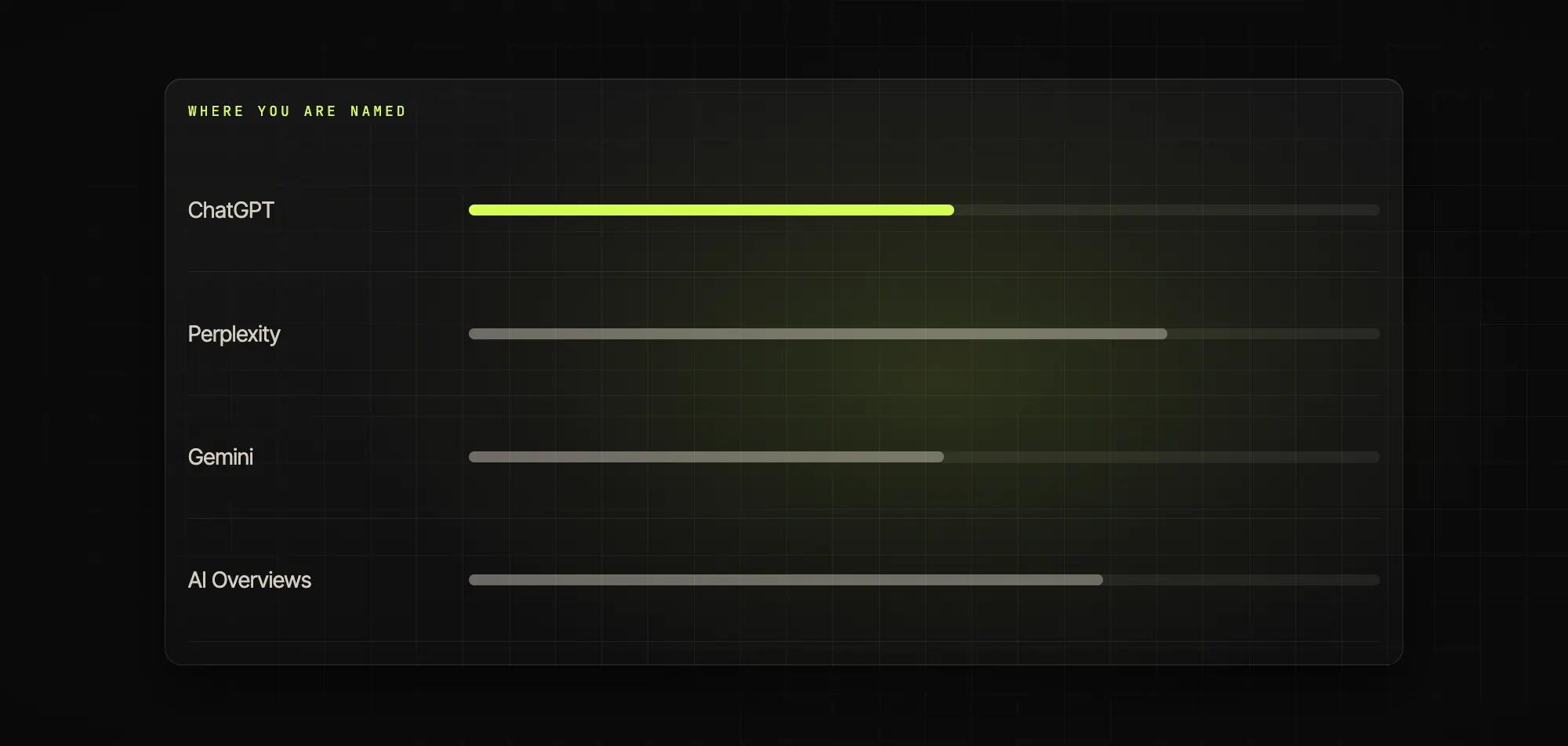
Citation share across ChatGPT, Claude and Gemini, measured before the build and every quarter after.
See where you stand before anything is built. The free Citation Checker asks ChatGPT, Claude and Gemini 10 buying questions about your category and scores how often your site is cited.
Run the Citation CheckerWe have not published a SaaS search build yet. This is the one we cite: 400 pages over 12 months for a residential cleaning company in Vancouver, name withheld by agreement, measured in their own Search Console.
What carries over to SaaS
The research discipline, the approved gold page, phased releases, internal linking and the measurement.
What changes
The page types (services and cities become use cases, industries and integrations) and the volumes: SaaS searches are usually smaller and each one is worth more.
Search Console, Feb to Apr 2025 vs Mar to May 2026. Branded split from SEMrush, Aug 2024 vs Apr 2026.
Pages carry the product demo where it helps, and the page plan comes straight from the GTM strategy, so every page argues the same positioning as the rest of the launch. Healthcare SaaS pages also go through your compliance reviewer.
Each plan opens with a one-time setup quarter that builds the system, then a monthly retainer that keeps it running. Ad spend and print are billed at cost, separate from the fee.
A SaaS team putting its first real go-to-market system in place: positioning, a site that ranks, demo video and a steady social cadence.
A SaaS team running several channels at once, with outbound, paid and direct mail working from the same strategy as the content.
A SaaS team covering several segments or verticals, with account-based direct mail and founder thought leadership on top.
Every monthly line has a published unit price, so a plan can be trimmed or extended to fit the channels the strategy says to run. You own the pages, the videos, the source files and the accounts.
Compare the plansWhat is GEO, and how is it different from SEO?
What are programmatic SEO pages for SaaS?
Can programmatic pages hurt a site?
Do you have SaaS SEO results?
How do you track AI citations?
How long before the pages rank?
Each piece is built from the same strategy document, by the same team, so the demo, the pages, the posts and the ads all say the same thing.
B2B SaaS marketing agency, the go-to-market team
GTM strategy for B2B SaaS, ICP to channel plan
SaaS product demo video production for B2B teams
Social media content for B2B SaaS, shipped weekly
Healthcare SaaS marketing, HIPAA-aware GTM builds
A 30-minute call. Tell us your category and the buyers you want to reach. We will show you the page types worth building first and what AI answers say about your category today.